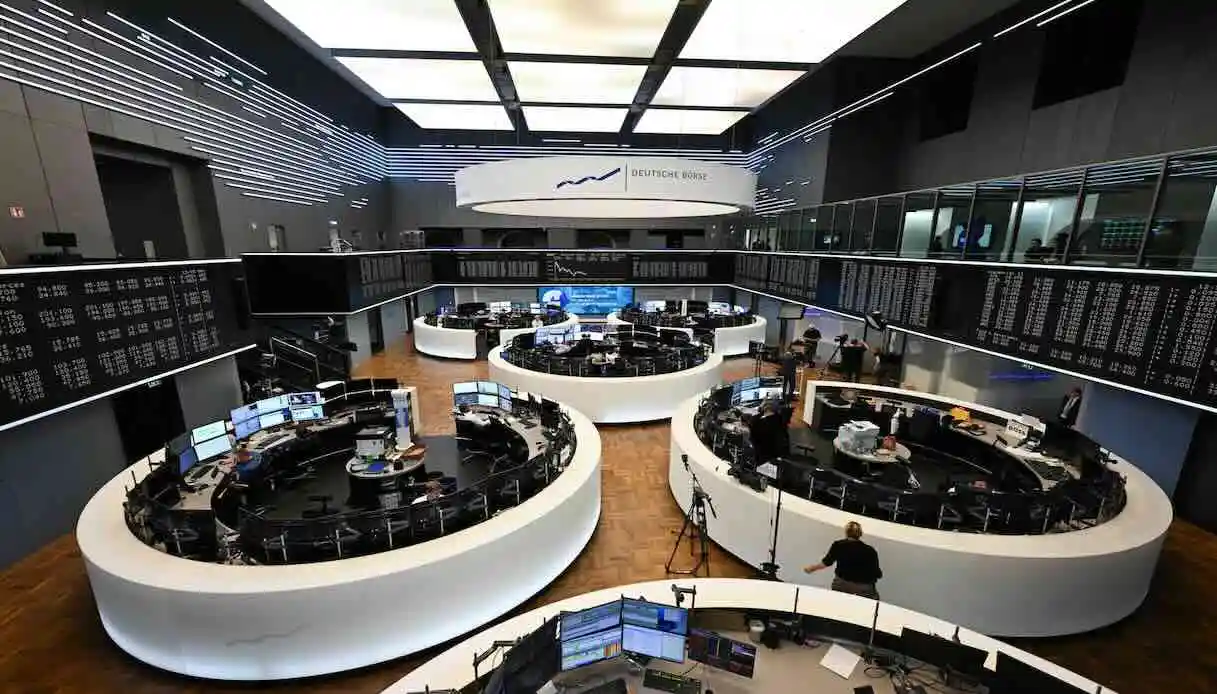
Last positive session of the week for European stock markets, including FTSE MIB which during the day also beat the new historic high of 51,646 points, supported by expectations for a possible agreement between the United States and Iran which could involve the entire Persian Gulf area, despite the conflicting signals of the last few hours. Iran’s Fars news agency, citing a source close to the negotiations, said reports of signing a deal with the US on Sunday in Geneva were false, while Hezbollah said it was confident that Iran would insist on Lebanon being included in a deal with the US.
Optimism affects most sectors, with energy sectors penalized by the decline in gas and oil prices. The tourism sector stands out in particular, favored by the turning point in the peace negotiations: the prospects of a reduction in the cost of fuel and a normalization of travel on Middle Eastern routes support airline and tourism stocks. Banking and construction are also highlighted. The auto sector also performed well, after Stellantis, Volkswagen and Renault, which represent around 60% of European car production, formally asked the European Parliament for regulations that adequately reward manufacturers who localize production and keep vehicle design in the region.
Today’s focuses
Comments continued on the ECB’s choices. Yesterday’s 25 basis point increase is neither a surprise nor the start of an aggressive cycle, but rather an operation aimed at calibrating expectations in a context in which the energy shock linked to the Middle East is starting to spread beyond the prices directly affected. Joachim Nagel (Bundesbank), however, used a rather restrictive tone in the morning, claiming that the bank would be ready to raise rates in July too if necessary, an event to which the market currently assigns a rather low probability.
The real focus, however, was on SpaceX’s maxi IPO, which acts as a critical thermometer of global risk appetite, in a context of already high valuations in the artificial intelligence sector. Demand more than four times greater than supply, for a record operation (75 billion dollars raised, approximately 1,800 billion dollars in valuation), suggests that liquidity remains abundant and that the “risk-on” context has not yet been called into question by monetary normalization or geopolitical tensions. At the close of the European markets, the share had not yet beaten the first price and indications of interest from operators showed an opening price of around 162 dollars per share, down from the 175 dollars initially expected, but still up 20% compared to the IPO price of 135 dollars.
European lists and Italian stocks
Among the European stock markets, Frankfurt is effervescent, with an increase of 1.76%, London is incandescent, boasting a strong increase of 1.63%, and in the foreground is Paris, which shows a strong increase of 1.83%.
Rain of purchases on the Milanese stock exchange, which brings home a gain of 1.97% on the FTSE MIB; along the same lines, the FTSE Italia All-Share closes with the wind in its sails, reaching 54,229 points. The FTSE Italia Mid Cap is revving up (+2.8%); along the same lines, the FTSE Italia Star is effervescent (+1.64%).
At the top of the ranking of the most important stocks in Milan, we find Buzzi (+5.67%), Mediobanca (+4.59%), STMicroelectronics (+4.52%) and Intesa Sanpaolo (+4.30%). The worst performances, however, were recorded on Moncler, which closed at -3.75%. DiaSorin suffers, showing a loss of 2.92%. Prey of Avio sellers, with a decrease of 2.65%. Sales are concentrated on ENI, which suffers a drop of 2.25%.
At the top among Italian mid-cap stocks, Cementir (+8.53%), Zignago Vetro (+8.34%), Credem (+6.33%) and Maire (+6.20%). The worst performances, however, were recorded on El.En, which closed at -1.44%. Pharmanutra was substantially weak, recording a decline of 1.08%. Carel Industries moved below parity, highlighting a decrease of 1.01%. Moderate contraction for RCS, which suffered a drop of 0.95%.
What to watch next week
After the ECB this week, several central bank meetings are scheduled for next week, with the most awaited event undoubtedly represented by the Fed in the first meeting chaired by the new governor Warsh. No changes in rates are expected, but the meeting will be important above all to understand the approach that Warsh intends to give to the central bank and its position in a context characterized by persistent inflationary pressures. Among the other meetings on the calendar, the one of the BoJ stands out, scheduled for Tuesday, from which a rate increase of 25 basis points is expected. Thursday will instead be the turn of the BoE, from which no changes in rates are expected, although signs of possible future increases could emerge. Among smaller central banks, unchanged rates are expected on Tuesday from the Australian central bank (RBA), on Wednesday from the Swedish central bank (Riksbank) and on Thursday from the Swiss central bank (SNB).
On the macroeconomic front, no particularly significant data are expected. In the United States, May retail sales will be published on Wednesday, while in the euro area the ECB’s wage tracker, the indicator developed to monitor wage trends in the area, will be released on the same day. Also on Wednesday, the UK inflation data is expected, while on Friday it will be the turn of Japanese inflation.
As for geopolitics, barring surprises over the weekend on peace in the Middle East, the G7 summit will begin in France on Monday, which will end on the 17th and which takes on particular importance in light of a possible agreement between the United States and Iran. At the summit, G7 leaders could also pressure Trump to support a European-led mine-clearing mission in the Strait of Hormuz.