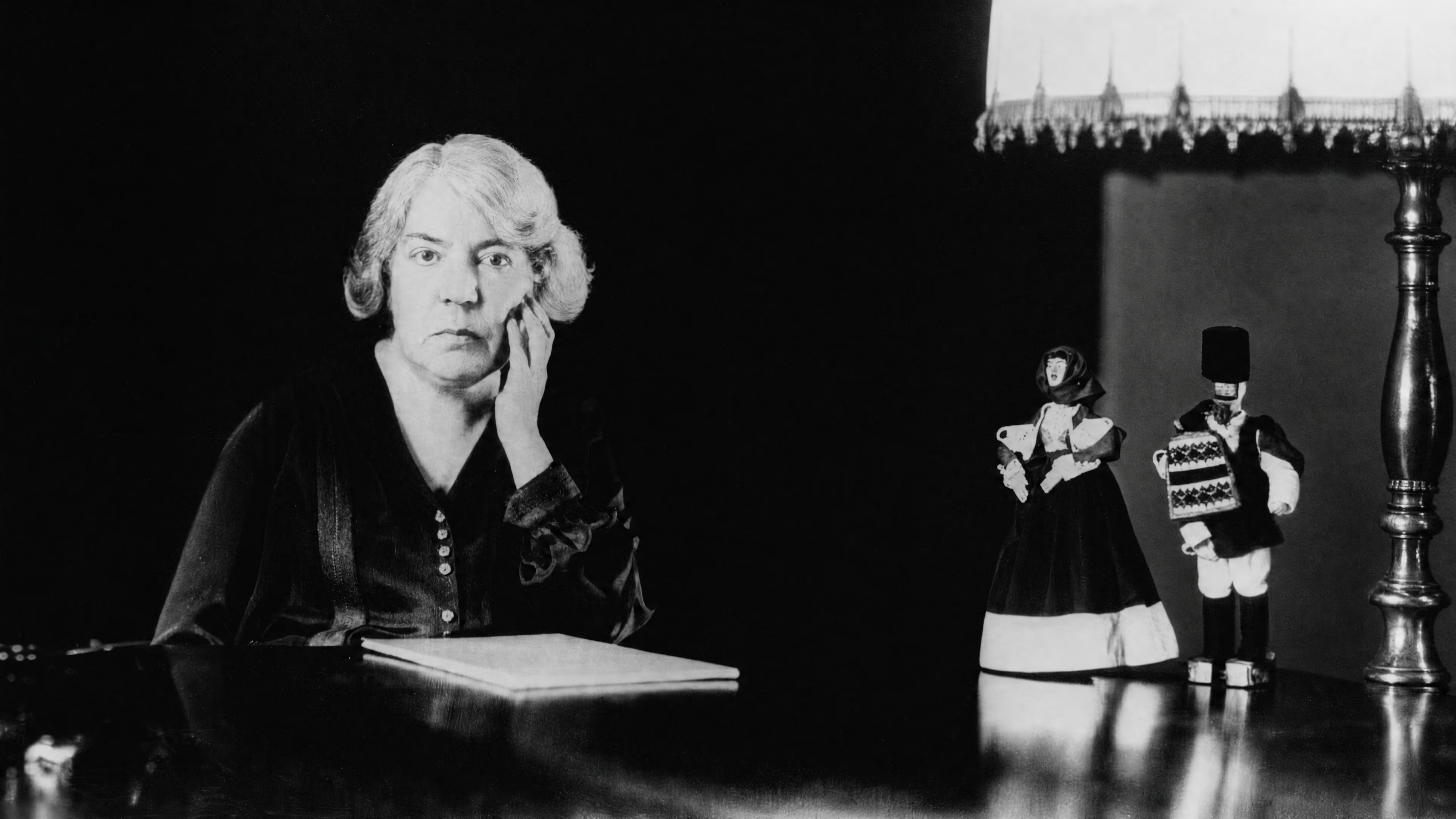
How do you win the Nobel Prize for Literature with only a primary school diploma and without having Italian as your mother tongue? This is what Grazia Deledda – born in Nuoro in 1871 – did, the second woman to receive the prize (the first was the Swedish Selma Lagerlöf in 1909) and the only Italian to have won it so far. The answer lies in self-taught training and in a language learned obstinately as an adult.
To celebrate the centenary of the Nobel Prize awarded to her in 1926 (and delivered on 10 December 1927), on 28 November the Sormani Library in Milan will inaugurate an exhibition in the Adolfo Pini Foundation, in which an autograph manuscript – “The unveiled manuscript” – of the famous writer who thought in Sardinian and wrote in Italian is exhibited to the public.
The only Italian woman who won the Nobel Prize for Literature only had primary school education
In the Sardinia where Grazia Deledda was born, knowing how to read and write was an exception. In the 1871 census, the year in which she was born, 88% of the population was illiterate (the percentage exceeded 90% for Sardinian women). For a woman, in particular, being able to attend primary school and study for even just four years was not a given, but Deledda had been lucky enough to be born into a wealthy family.
Her father, Giovanni Antonio, was a landowner who worked his lands with a great passion for poetry (he composed verses in Sardinian, from time to time), but above all for his hospitality, with friends in all the villages around Nuoro, which was then a small and isolated center (she herself defined it as a “Bronze Age village”). In the autobiography written for the Nobel, Deledda said that it was thanks to this peculiarity of her father that she began to get to know the characters of her future novels.
School didn’t last long: he only attended primary school (up to the fourth grade, according to various biographies) and nothing else, because in Nuoro there were no high schools to attend. Once home, her parents had her followed for a while by a private teacher, who gave her lessons in Italian, Latin and French. Everything else was reading and personal study, with all the books that she found available or that were given to her by friends of her father.
Deledda, who lived in a country with patriarchal and narrow views in which women were destined to be only “wife and mother”, experienced badly her need to realize herself in a more open and visionary space, but she decided to change things by describing the Sardinia of the time around her.
The first story was published when he was still a teenager: the novella Sangue sardo was published in 1888 in the Roman magazine Ultima Moda. Then he collaborated with Angelo De Gubernatis’s magazine of Italian popular traditions, where his Popular Traditions of Nuoro appeared: it was a way of studying the culture of his world up close.
His career took off with La via del male, published as a novel in 1896 by Speirani and Figli di Torino (and then in 1906 as an appendix novel in the Gazzetta del Popolo of Turin) and positively reviewed by Luigi Capuana.
Grazia Deledda’s native language was Sardinian, but she wrote all her masterpieces in Italian
The elementary foundations, combined with Deledda’s extraordinary curiosity and stubbornness, took her far, but switching from her first language – Logudorese-Nuoro Sardinian – to Italian was no walk in the park.
Biographer Anders Hallengren, in the text published on the Nobel website, observed that for Deledda reading and writing meant using a “foreign” language (in Sardinian, “paràula furistera”). Yet, it was the language that the writer used in all her works.
His Italian, however, carries traces of Sardinian in its syntax, images and vocabulary (words from the Nuoro dialect often appear in the novels). The best-known case of this fact is Canne al vento (1913), considered his masterpiece: published in installments in L’Illustrazione italiana between January and April 1913 and then in volume by Treves.
The scholar Dino Manca described his education as the meeting of two worlds: on the one hand a culture of agro-pastoral, oral and sardophone origins, on the other a written and Italian culture. But not only that: according to him, Deledda was for twentieth-century Sardinian Italian-language writers what Manzoni had been for nineteenth-century writers, that is, a credible literary and linguistic model.
The “unveiled manuscript”
Milan played an important role in the diffusion of his books: from the 1910s onwards, most of his works were published by the Treves publishing house, including his posthumous book Cosima (1937).
To celebrate the centenary of the Nobel, from 28 November 2026 to 19 December 2026 the Sormani Library will present “The Unveiled Manuscript” to the public, as part of an exhibition at the Adolfo Pini Foundation.
The manuscript, one of the most precious documents in Sormani’s collections, tells a brief glimpse of the life of Francesca, a girl from the Sardinian countryside, and had already been shown to the public in 2022, for the 150th anniversary of the writer’s birth.
The six sections of the exhibition touch on the figure of Deledda and the awarding of the Nobel, the relationship with Milanese publishing and the Treves brothers, the history of the autograph and its evolution in subsequent reworkings.
Sormani Library The Nobel Prize Istat Treccani