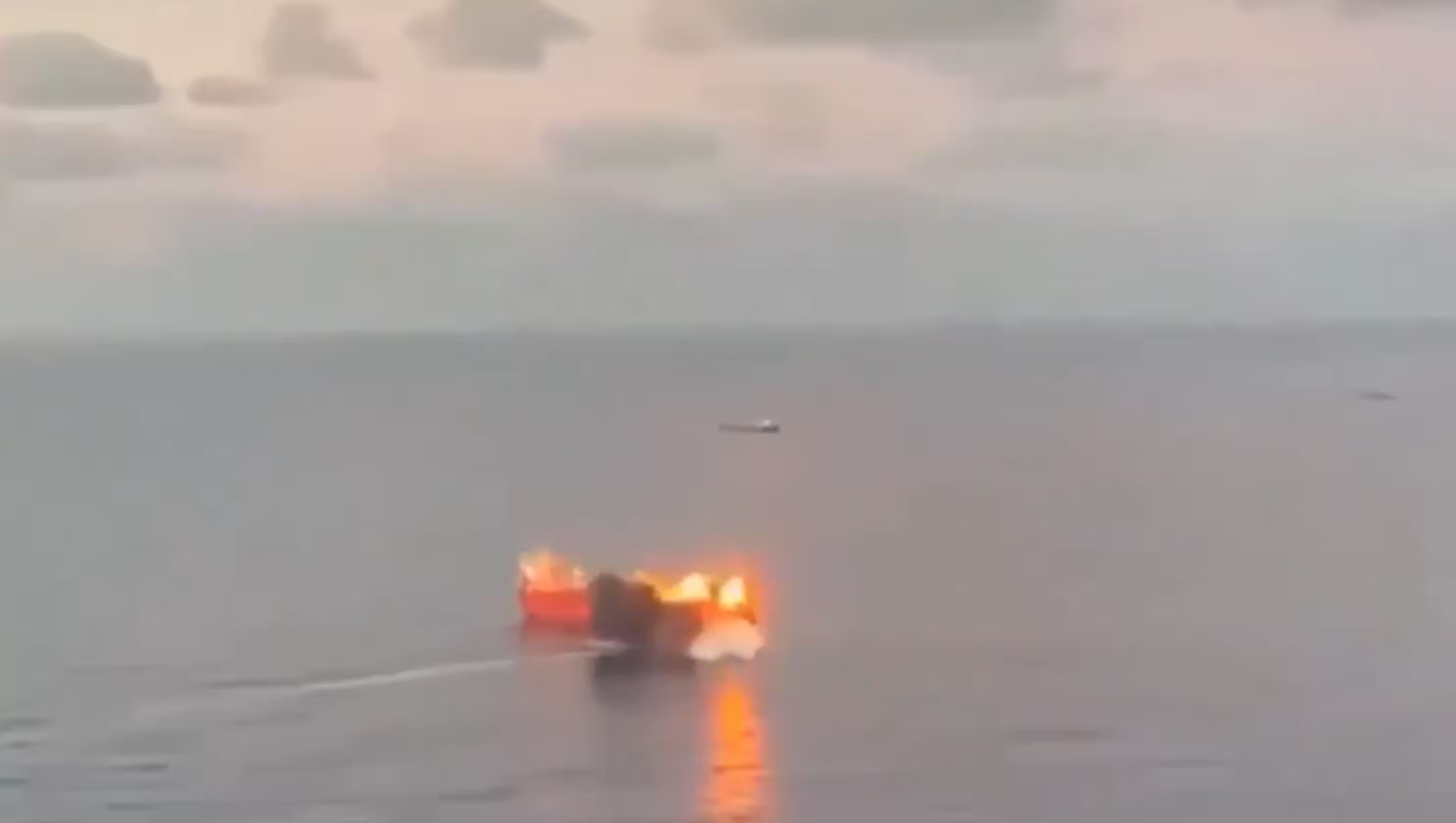
Two Italian technicians from Rheinmetall Italia lost their lives in Kuwait following a drone attack: the Ministry of Foreign Affairs confirmed that the two compatriots were engaged in maintenance of the detection antennas of the Skyguard anti-aircraft defense system, supplied to the Kuwaiti Armed Forces.
Foreign Minister Antonio Tajani reported in the Senate that the drones were of Iranian origin, but Tehran denied its involvement in the attack, calling the accusations “an attempt to increase insecurity in the region”.
Iranian Foreign Minister Abbas Araghchi expressed Tehran’s willingness to collaborate with Italy and Kuwait to ascertain responsibility for the incident, while Tajani specified that the Iranian manufacture of the drone does not necessarily imply that the attack was conducted directly by Iranian forces, without however excluding the involvement of militias allied with Tehran.
At the moment, the exact location where the explosion occurred has not been communicated, nor the precise dynamics: the tragic episode, however, has drawn attention to the security of military installations in the Gulf countries and to the involvement of other states in the region in the war between the USA, Israel and Iran.
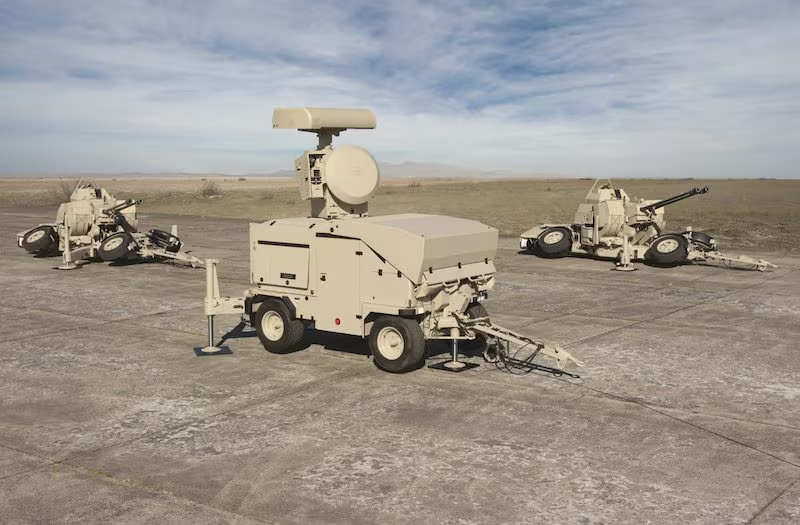
The Skyguard represents a land-based anti-air defense system, designed to protect strategic infrastructures and military installations from threats coming from the sky (such as drones, in fact), through the integration of radar, IT systems and interception systems.
What is Skyguard and how does the anti-aircraft defense system work
The Skyguard, marketed by the German industrial group Rheinmetall under the Oerlikon brand, belongs to the category of close-in anti-aircraft defense systems. It is therefore not a single weapon, but a set of devices that work to identify, track and counter potential air threats.
As specified in the official Rheinmetall documentation, the general operation of Skyguard systems is based on the integration of different technologies:
- Surveillance radars, which allow you to monitor the airspace and detect the presence of objects in flight;
- Tracking systems, which allow you to follow the movement of identified objects;
- Fire control unit (Fire Control Unit), which processes the information collected by the sensors and coordinates the defense devices;
- Interception systems, i.e. the component of the system that physically counteracts aerial threats.
But how does a radar detect an object in flight?
The physical principle underlying this technology is the reflection of electromagnetic waves. As explained by NOAA, radars emit radio waves which, upon encountering an object, are partly reflected back towards the receiving device. The analysis of the return signal allows us to obtain information on the detected object, including its distance and its movement (through some specific processing techniques).
In air defense systems, this information contributes to the reconstruction of the airspace situation and the management of defense operations.
Radar and interception systems therefore perform two different but complementary functions: the former allow us to observe what is happening in the sky, while the latter allow us to counter identified threats.
What is the role of the Skyguard, the shield in Kuwait’s anti-aircraft defense
The Skyguard, therefore, is not a physical shield, but a set of technologies for detecting, processing and intercepting air threats, designed to operate within a multi-level anti-air defense, in which systems with different characteristics work together to protect territory and infrastructure.
The Skyguard, however, has been supplied to the country for several years: already in December 2012 an exercise was conducted by the Kuwaiti Armed Forces, during which the system intercepted two aerial targets used to simulate threats.
Over the years, the Skyguard family of systems has evolved to respond to new military technologies, including the increased deployment of unmanned aerial vehicles (UAVs).
Rheinmetall announced, for example, in January 2023 a program to modernize Skyguard systems intended to also improve the ability to counter small drones.
The identity of the country receiving this specific update, however, was not made public: it is therefore not possible to establish whether the update also affected the systems supplied to Kuwait.
Rheinmetall Rheinmetall Defense Analysis NOAA Ministry of Foreign Affairs and International Cooperation CENTCOM