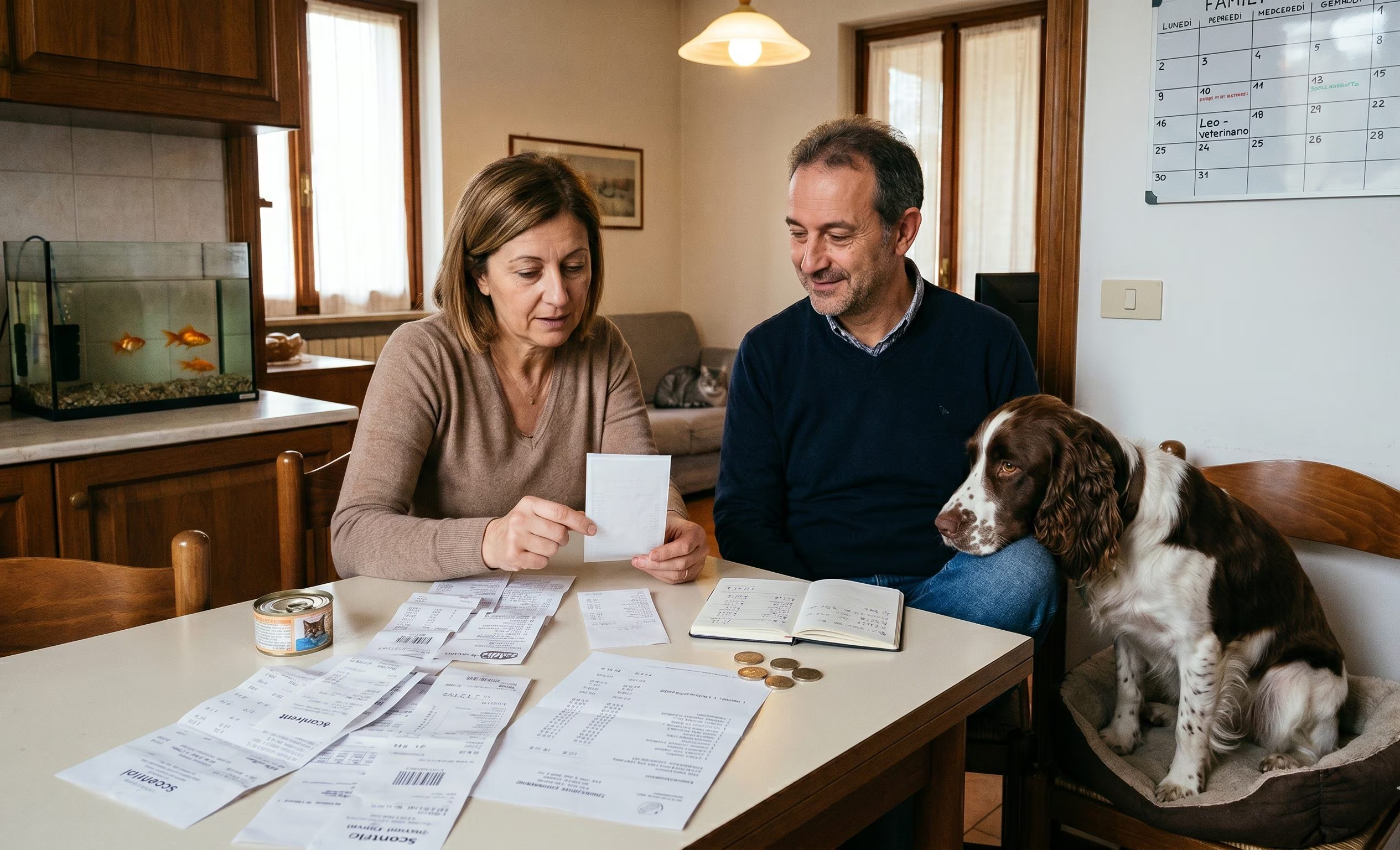
More than one in three Italian families lives with at least one pet. There are over 10 million families – 37.7% of the total, according to the most recent Istat data – who have a dog, a cat, a fish or a bird at home, for a total of 53.6 million animals.
A deep-rooted presence, growing slowly but steadily compared to 36.2% in 2015, which has transformed over the years into a 5.3 billion euro market – that of food and products for pets, growing by 2.5% in the last year alone according to Circana data processed by Assalco.
Spending dynamics which, for many families, are starting to weigh on the domestic budget. Because keeping an animal costs more and more: not only due to the prices of products and medical services, but also due to a tax system that still treats dog and cat food as a luxury good. Keeping a dog or a cat in Italy today costs, on average, between 760 and 1,200 euros per year: in the last year alone, the average costs for supporting a pet have increased by approximately 149 eurosdue to food and health (which is affected by the lack of public funds dedicated to medical and veterinary expenses for pets).
How many and which pets are there in Italy: the Assalco-Zoomark 2026 report
The most updated photograph of the Italian pet population comes from the Assalco-Zoomark 2026 Report, which estimates 53.6 million pets in the country. Fish are the largest category of all, with over 25 million specimens living in 1.7 million aquariums, but dogs and cats dominate the relationship with families: 9.1 and 11 million specimens respectively, present in 28.7% and 26.7% of families. This is followed by birds (4.1 million), reptiles and amphibians (2.7 million) and small mammals such as rabbits, chinchillas and ferrets (1.4 million).
Istat data, collected through the multi-purpose survey “Citizens and free time” and published in December 2025, estimate around 25.5 million pets in Italian homes. The difference compared to the Assalco data is methodological: the SWG survey commissioned by the sector association uses a more detailed ad hoc survey, while Istat is based on a representative sample of families. However, both sources converge on the indicator that matters most: the share of families with at least one pet is growing and stands steadily at around a third of the population.
Who has dogs, cats and other pets: Istat data
There is a common misconception that the data dismantles with some clarity: the idea that pets are above all the company of those who live alone. The numbers say the opposite. According to Istat, couples with older children, aged 14 and over, have the highest share of families with animals: 51.2%. They are followed by single-parent families with children in the same age group (48.8%) and childless couples with at least one member under 65 (47.9%), a rapidly growing category: from 38% in 2006 to 47.9% in 2024, with an increase of ten percentage points in twenty years. Single people over 65, on the other hand, stop at 22.7%, the lowest share among all family types.
The Assalco Report adds a relevant clarification on gender: the myth according to which cats are the favorite animals of those who live alone is not supported by the data: singles have dogs and cats in equal measure, even if among dog owners there is a slight male prevalence – 25.3% of single men have a dog, compared to 19.7% of single women – while the “cat dad” phenomenon is reducing the traditional female imbalance among feline owners.
How much is the sector worth: 5.3 billion and growth that beats inflation
The pet food and products market in Italy is worth 5.3 billion euros in 2025, up 2.5% compared to the previous year, according to Circana data processed by Assalco. Of this figure, 4.2 billion comes from food for dogs and cats, which represents 79% of the total, while the remaining billion is made up of accessories, hygiene, litter and food for other animals.
However, the data that reveals the real pressure on family budgets is not the absolute value, but the historical growth rate: between 2022 and 2025, the pet food market recorded an average annual growth rate in value of 6.9%, two points higher than the average growth of packaged consumer goods in the same period (4.9%). In absolute terms, sales went from 3.4 billion euros in 2022 to 4.2 billion in 2025.
The crucial aspect is that for a good part of this period the growth in turnover exceeded that in volumes: between 2022 and 2024 the quantities sold remained practically stable at around 800 thousand tonnes, while the value rose to double figures. The signal is direct: prices have risen, and have dragged up family spending regardless of how much food they were actually buying.
Only in 2025 is a partial reversal of the trend observed, with volumes returning to grow by 1.3%, while the pace of price increase slows to 2.7%. A sign of normalization, not yet stabilization.
And there is also another issue that should not be underestimated when talking about prices: around a third of families consider the expense of feeding dogs and cats high, compared to a majority who define it as moderate. The boundary between the two perceptions depends a lot on the type of product chosen (and the market is moving towards premium) but also, and increasingly, on how much that 22% rate weighs on every purchase at the supermarket or in pet shops.
How much you spend: the issue of 22% VAT on pet food
The comparison with other European countries is uncomfortable: elsewhere pet food is often treated as a basic necessity, with reduced or subsidized rates. In the State of New York, United States, a bill was recently introduced to exempt dog and cat food from sales tax, making it equivalent to human food products.
The perception of the problem is widespread among Italian owners: according to the Assalco Report, over 80% of those who have a dog or cat declare themselves in favor of reducing the VAT rate on pet food to 10%, and the consensus rises further if the demand concerns dietary foods, those with therapeutic purposes. Even considering the entire sample (including families without animals) almost 65% are in favor. The topic has arrived in Parliament with various initiatives, including the law proposal by Mrs Dalla Chiesa and Bergamini and an agenda accepted by the government in the 2026 budget law, which commits the executive to evaluating the reduction of VAT on dietary foods for pets.
On the deductions front, the tax system already allows veterinary expenses to be deducted at a rate of 19% on a maximum threshold of 550 euros. The real benefit, however, is limited: net of the deductible, the maximum tax saving for a taxpayer is around 80 euros per year, regardless of how many animals they own and how much they have actually spent.