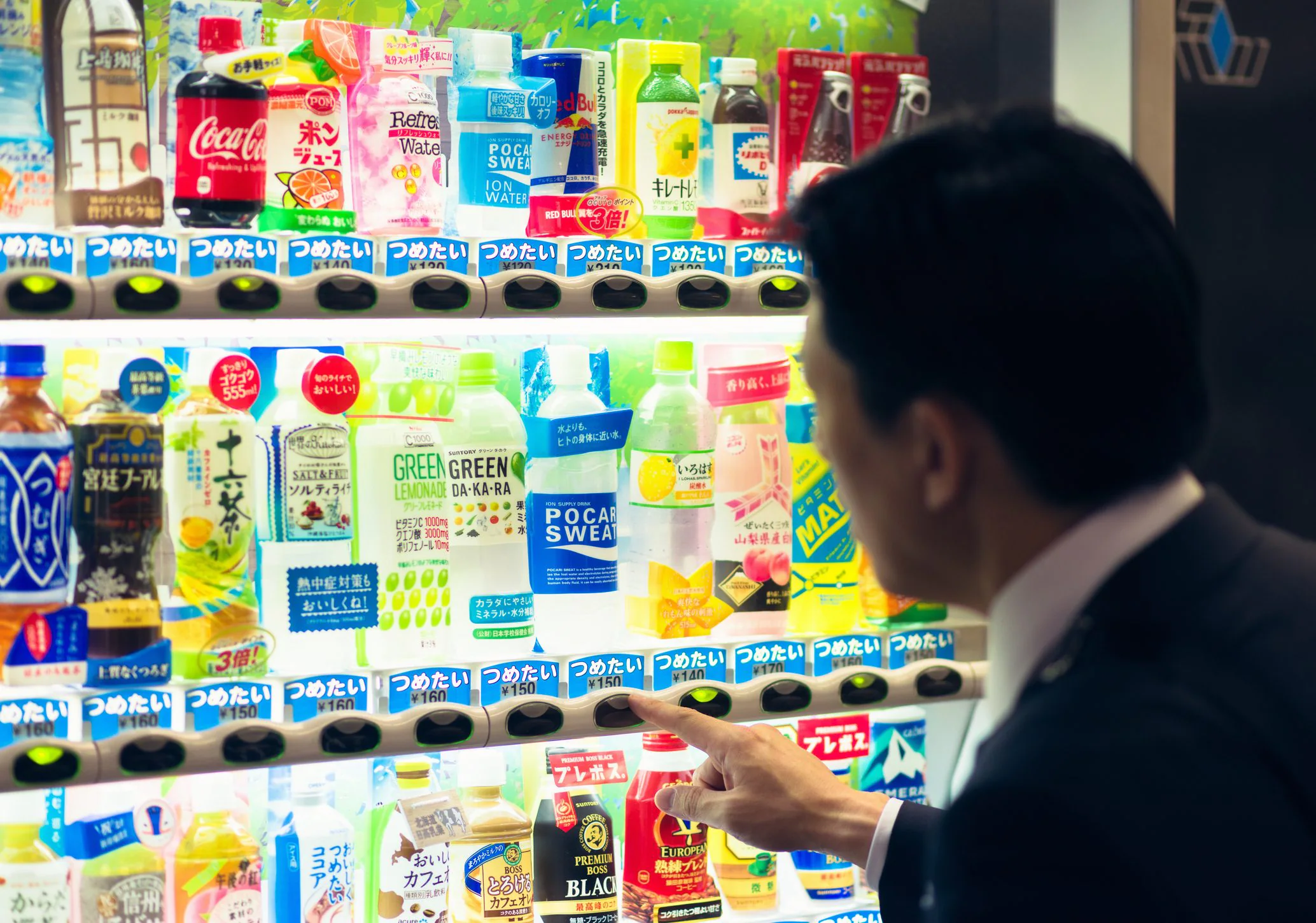
In Japan you just need to stop in front of a vending machine to understand how everyday life works there differently: the jidōhanbaiki (自動販売機, i.e. “vending machine”) are not simple machines, they are small shops that are always open, reliable and surprising, capable of offering you a hot drink in the middle of winter, a steaming ramen late at night or even a mystery box that can contain a gaming console. This variety exists because the country has made convenience a form of efficiency: very low crime rates, hectic life and small urban spaces have transformed petrol stations into an essential service, present everywhere, from stations to mountain roads. With over five million units and increasingly advanced technologies, the jidōhanbaiki tell of a practical, curious and ingenious Japan, where even a simple gesture like pressing a button becomes part of the cultural experience.
When we think of a distributor like those we find in the West, we imagine a simple reseller of snacks or drinks, or some machine that distributes toys or gadgets for a few euros. This is because we usually associate it with a temporary whim, while in Japan the vending machine is the result of a different school of thought: it acts as a small 24/7 shop suitable for every type of need. There vending machine in this sense it is a fundamental resource that citizens can exploit to satisfy their needs. Perhaps you might think that the convenience of vending machines is a phenomenon limited to big cities like Tokyo or Osaka, but in reality jidōhanbaiki are everywhere: on street corners, in temples, near stations, even in mountain villages.
Inside them you can find practically everything. Some offer hot, cold or even iced drinks, some distributors even sell insect snacks, fine meat, caviar, frozen ready meals or fresh food. Furthermore, the vending machines dedicated to gastronomic specialties such as ramen, gyoza (“Chinese dumplings”), sake and of course sushi.
There are distributors called King’s Treasure Box who with just 7,000 Yen (approximately €5) release some mystery box inside which, if you are very lucky, you can find game consoles such as the PlayStation Vita, a Nintendo DS, or objects of little value such as a pair of plastic glasses. In short, a real automatic lottery.
Perhaps you have also heard of the famous “special” distributors: those dedicated to adult toys really exist, but only in specific contexts such as hotels or specialized shops. However, the story of the alleged distributors of used underwear is very different: an urban legend that continues to circulate, born simply from the fact that some machines sell completely common items of clothing – socks, t-shirts, ties or new underwear – nothing more.
As for the reasons why these distributors have spread on such a large scale and in such a varied manner in Japan, there are various theories. On the one hand, the country boasts a very low rate of crime and vandalismwhich allows you to leave the dispensers unattended without risk; on the other, the culture of comfort and efficiency combines with the high population density of big cities, where commercial spaces are limited and life is frenetic.
According to a report from CNNin 2019 there were 5.5 million distributors across the country, one for every 23 inhabitants, the highest proportion in the world. Now widespread for over half a century, jidōhanbaiki continue to evolve, becoming increasingly intelligent and interactive thanks to the introduction of digital payments, touch screens and artificial intelligence. The next time you are in Japan and need something quick, stop in front of one of those colorful vending machines and you will probably be spoiled for choice.