The energy market is once again looking beyond the price of crude oil. Brent moves around 76 dollars a barrel and WTI just above 72 dollars, with a weekly increase of close to 6% for Brent and 5% for American crude. Tensions in the Gulf and the Strait of Hormuz therefore continue to support the risk premium on energy.
The energy market is once again looking beyond the price of crude oil. Brent remains affected by tensions in the Gulf and the Strait of Hormuz, but the most delicate signal comes from refined products: petrol and diesel.
Pressure isn’t just about the barrel. Fuel markets are signaling a supply squeeze, with high refining margins, fragile inventories and stronger summer demand.
Diesel under pressure, the crux of refining
Diesel is the most sensitive point of the new energy tension. Its importance is linked to the structure of the real economy: trucks, freight transport, agricultural machinery, construction sites, port logistics and many industrial supply chains depend directly on diesel. When diesel prices rise, the increase is not confined to private mobility, but is transmitted along the price chain.
What matters above all is the refining capacity. Even when oil is available, plants capable of transforming it into usable fuels are needed. If refineries operate under stress, if inventories are low or if some trade flows are interrupted, the price of refined products can rise more than crude oil. It’s exactly the kind of imbalance that markets are starting to price in.
Petrol, summer demand and impact on families
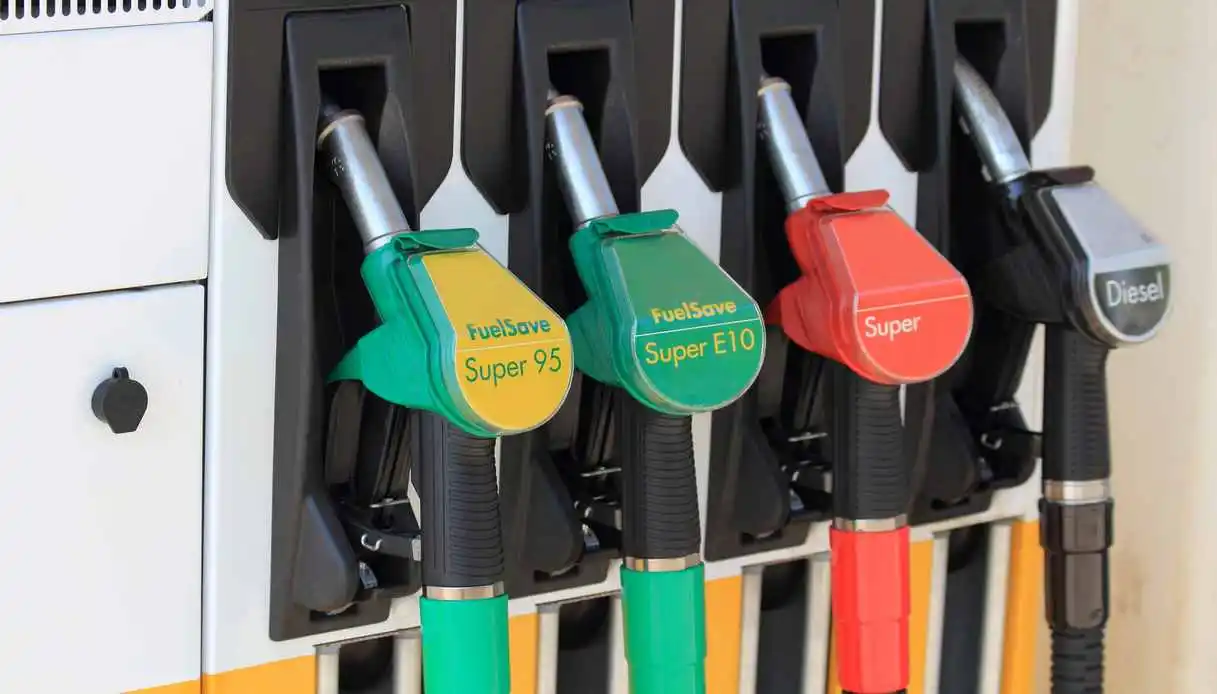
Petrol, on the other hand, tells the more direct side for families. Summer increases travel, supports demand and makes any tension on pump prices more visible. The risk is that the consumer perceives less the cooling of crude oil and more the rigidity of the final price, especially if refining, distribution and inventories remain under pressure.
The high cost of petrol weighs on family budgets because it affects a recurring expense that is difficult to compress. For many it is not an accessory item, but a necessary cost for work, daily travel and holidays. If petrol remains high, it may reduce the space for other consumption, just as the market looks to the stability of domestic demand.
Inflation, because fuels complicate the reading of the ECB
For the ECB, the fuel issue is delicate because it can make the decline in inflation less linear. Frankfurt looks above all at underlying inflation, wages and services, but energy and fuel remain variables capable of influencing the expectations and behavior of businesses and consumers.
If diesel and petrol remain under pressure, the risk is that part of the costs will be transferred to transport, distribution and production. It does not necessarily mean a new general flare-up in prices, but it can slow down the normalization process and make the central bank’s communication more prudent.
The market, therefore, does not only look at the final inflation figure, but at its composition.
BTP, utilities and markets: the financial channel of high fuel prices
The effect of fuels also reaches the financial markets. If gasoline and diesel fuel new inflation expectations, bond yields may remain higher and the path of rates more uncertain. For Italy this means attention to BTPs, the spread and the cost of debt financing.
Utilities are another sector to watch. On the one hand they are sensitive to rates, because they finance significant investments in networks, energy and infrastructure. On the other hand, they operate in a context in which the volatility of energy prices can change margins, coverage and risk perception. A fuel market under tension therefore makes reading the sector less simple.
The point for investors is to understand whether the high fuel prices are a temporary phenomenon or a sign of more persistent pressure. In the first case the market can absorb it as seasonal and geopolitical volatility. In the second, the risk is that inflation, rates and growth return to move in a less favorable combination.
The high cost of fuel reopens the energy dossier
The market day therefore shows an important transition: it is no longer enough to look at Brent to understand the direction of energy. The price of crude oil remains decisive, but petrol and diesel can describe a different pressure, closer to the real economy and more immediate for the consumer.
For Italy the issue is concrete. Families, businesses, industry, logistics, BTP and ECB enter the same transmission chain. If fuels remain under pressure, the disinflation path may become more fragile and the cost of energy return to the center of economic decisions.
The high cost of fuel is therefore not just news about prices at the pump. It is the point where geopolitics, refining, consumption and monetary policy meet and it is also the reason why petrol and diesel, even more than Brent, may become the true thermometer of inflation in the coming weeks.