The Balogun case dominated the front pages of newspapers around the world for days, not just sports ones. At the request of the President of the United States, Donald Trump, the number 1 of FIFA, Gianni Infantino, through an independent body, suspended the disqualification of the American striker, Folarin Balogun, who committed a direct red foul during the United States-Bosnia Herzegovina match of the Football World Cup (for the record, the stars and stripes national team was then eliminated in the round of 16 by Belgium). The media outcry was amplified by a press conference by Trump himself, who according to him “did not even know the meaning and consequences of the red card” which includes a one-day (or more) disqualification for the punished player. On a strictly legal level, the Balogun case revolves around the application of Article 27 of the FIFA Disciplinary Code which allows sanctions to be “freezed” and therefore the player is not required to immediately serve the disqualification. In fact, the sanction remains suspended during a probationary period and is activated only if another infringement of a similar nature and severity is committed during this period.
Sanctions at the 2026 Football World Cup for yellow and red cards: the Paraguay case
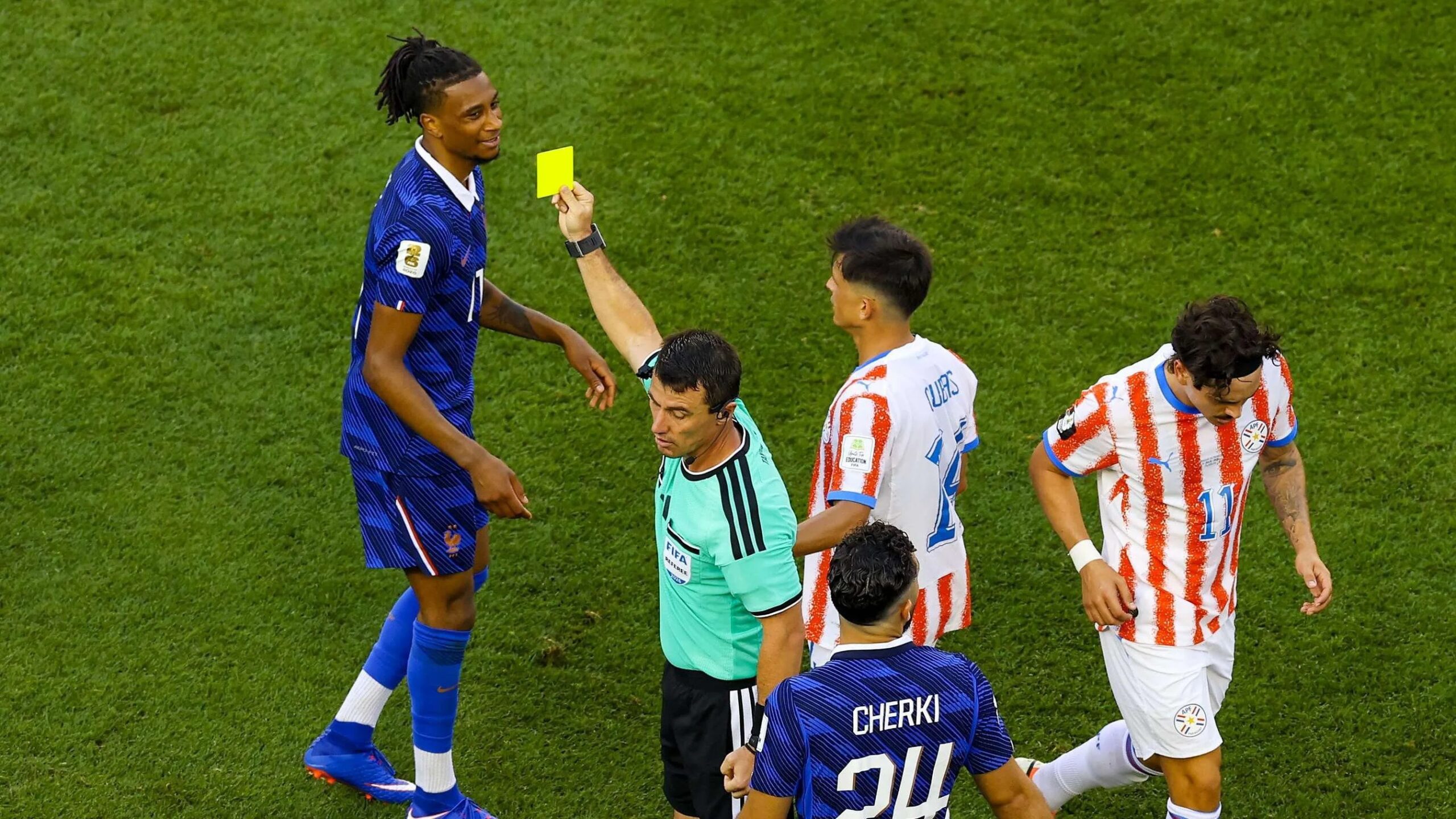
The case involving the President of the United States has put the spotlight on “sporting” sanctions in football, but perhaps not everyone knows that every infringement formally punished by the referee on the field also corresponds to a financial penalty, addressed directly to the Federation involved. The “price list” is established directly by FIFA: every single yellow card costs the national team that receives it 10,000 dollars, while an expulsion for a double yellow card corresponds to a fine of 15,000. In the event of a direct red card (as happened to Balogun), each Federation will have to pay out $20,000. Finally, a fine is foreseen which concerns the unsportsmanlike behavior of the entire team, i.e. when the match director inflicts disciplinary sanctions on five or more players of the same team during a match: in this case, in addition to the individual cards, 15,000 dollars are added.
Once the picture of the round of 16 was completed, the national team that had to pay the most for the disciplinary infractions of its players was Paraguay which “collected” 9 yellow cards (of which 5 in the “scandal match” against the USA, therefore the aforementioned “anti-sporting behavior” was triggered) and one red for a total of 125,000 dollars in fine. Close behind is Egypt with 12 cards yellows in 5 games which equate to a fine of 120,000 dollars. Canada completes the podium of the most fined countries (11 yellows, $110,000).
The price list introduced in the 2025 Club World Cup and the comparison with the national championships
The FIFA price list was introduced for the first time, on an experimental basis, on the occasion of the 2025 Club World Cup. For FIFA it is a system to cover, albeit minimally, the expenses of organizing the event which in this edition takes place in three countries, namely the United States, Mexico and Canada. This is not unique in the football panorama: in the Premier League, for example, there is a similar tariff which is applied directly to the individual player, but which provides for much lower figures (ranging from 10 pounds for a warning up to 55 for direct expulsion for violent conduct, to which 15 for administrative costs must be added).
In Serie A, as in other national championships, however, clubs do not pay a “fine” for every single yellow card received by their players. However, teams indirectly incur disciplinary costs (such as fines for misconduct – including by members of staff or fans) and may decide to withhold a portion of players’ salaries through internal fines for negligent behavior. Furthermore, the regulation, as for the World Cup, provides that, upon reaching certain thresholds of warnings (the fifth, eighth, eleventh, etc.), the player is disqualified for one match by the Sports Judge as happens with a direct expulsion or a sum of warnings: this obviously has a direct impact on the club’s coffers. Losing the player for one (or, in the most serious cases, several days) is a damage to the club which still pays his salary.