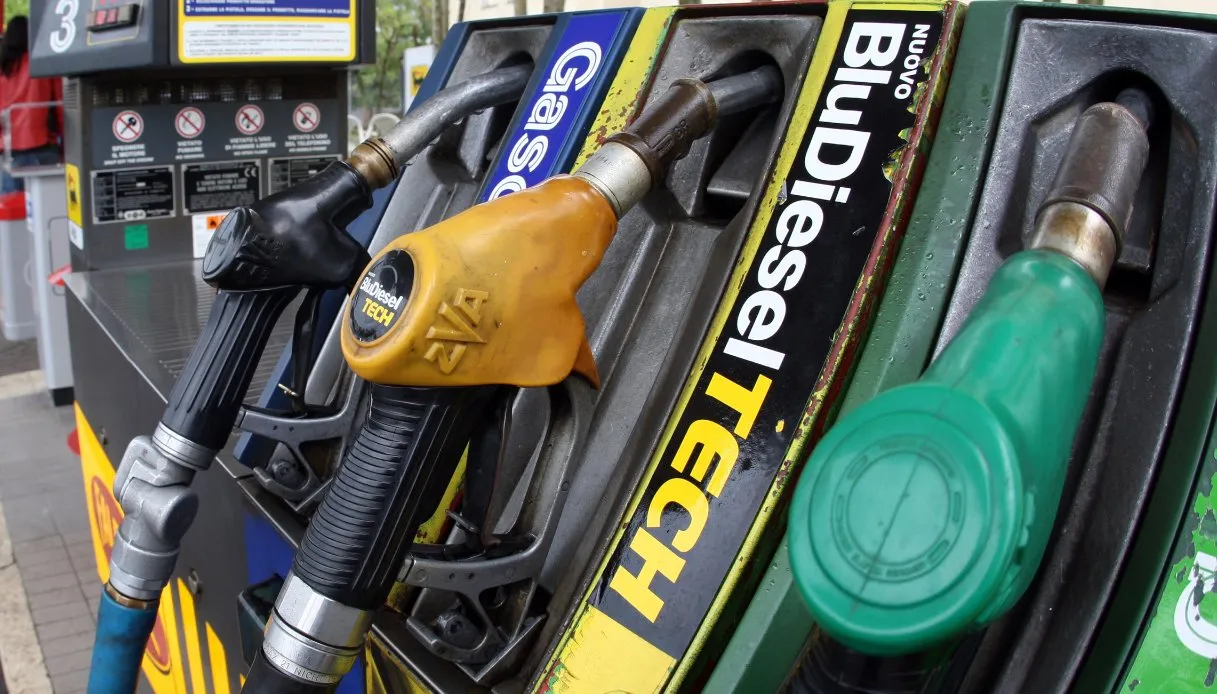
Oil prices are soaring and, with them, so are the costs of petrol and diesel at the pump. At the root of these increases are geopolitical tensions in the Middle East, uncertainty over the Strait of Hormuz and an increasingly unpredictable American policy line.
Domestically, the situation is even more frustrating for consumers. Although oil prices had fallen the previous day, prices at the pump throughout Italy still increased.
The price of oil
After the decline recorded yesterday, prices began to rise rapidly again today. Donald Trump’s speech had an impact, as he did not provide clear timing on the end of the war. This led European stock markets to open at a loss, and are still declining, while the price of oil is rising sharply.
Brent, the global benchmark index, reached 108.46 dollars, up 7.22% compared to yesterday. The West Texas Intermediate (WTI), a reference point in the United States, also exceeded the psychological threshold of 100 dollars, reaching 111.49 dollars: these are the highest levels since the beginning of the conflict, also higher than those recorded in 2022 after the Russian invasion of Ukraine.
The cost of petrol at the pump
The consequences are also evident in Italy, where petrol prices have risen dramatically in recent days. For Massimiliano Dona, president of the National Consumers Union, it is about:
yet another demonstration of how we happily continue to speculate. We hope that the Government will lower the excise duty on diesel by 40 cents, otherwise it will always remain above the 2 euro limit.
As regards unleaded petrol, after the motorways (1.827 euros per litre), the most expensive is recorded in Bolzano with 1.784 euros, which exceeds Basilicata at 1.782 euros. The latter is also the only region in Italy not to have recorded increases during the day. Calabria follows, with 1.779 euros per litre. The most virtuous region for prices is Veneto.
| Region/Autonomous Provinces | Price 2/04/26 (euro/litre) | Change in the cost of a 50 liter tank from 1 to 2 April (euro) |
|---|---|---|
| Bolzano | 1,784 | 0.15 |
| Basilicata | 1,782 | 0.00 |
| Calabria | 1,779 | 0.15 |
| Sicily | 1,776 | 0.15 |
| Molise | 1,770 | 0.05 |
| Puglia | 1,769 | 0.10 |
| Campania | 1,762 | 0.10 |
| Liguria | 1,762 | 0.10 |
| Trent | 1,761 | 0.15 |
| Aosta Valley | 1,760 | 0.40 |
| Friuli Venezia Giulia | 1,759 | 0.10 |
| Abruzzo | 1,755 | 0.05 |
| Sardinia | 1,755 | 0.15 |
| Lombardy | 1,753 | 0.15 |
| Tuscany | 1,751 | 0.10 |
| Emilia Romagna | 1,749 | 0.15 |
| Piedmont | 1,749 | 0.10 |
| Umbria | 1,749 | 0.00 |
| Lazio | 1,747 | 0.10 |
| Marche | 1,747 | 0.10 |
| Veneto | 1,744 | 0.10 |
The Iranian crisis is holding markets hostage
The central issue remains the conflict with Iran. After hinting at a diplomatic opening, the American administration changed its position, once again threatening an escalation of the attacks. This continuous oscillation between aggressive and more easing tones generates strong volatility on energy markets.
Ricardo Evangelista, Senior Analyst at ActivTrades, explains it:
The path of least resistance for oil prices remains upward. The longer the Strait of Hormuz remains effectively closed to around 25% of global oil and gas flows, the greater the impact of the supply shock on the global market and the greater the likelihood of further price spikes.
As long as there is no real prospect of normalization of cross-Strait shipments, price pressure is unlikely to abate.
The forecast: Brent towards 110 dollars
The scenario remains unstable. Analysts estimate that Brent could stabilize at $110 per barrel in the second quarter of 2026. However, the market may not yet have fully priced in the geopolitical risk: as long as the conflict continues and the Strait of Hormuz remains under threat, price pressure is unlikely to ease.
Added to this is a risk that recalls what already happened in 2022: the increase in energy costs is passed on to consumer prices. These, in turn, push up wages, triggering a new acceleration in inflation. A spiral that no European government wants to relive.
The key variable remains the duration of the conflict. If the Iranian crisis were to continue, what we are experiencing today could only be the beginning of a new structural phase, to which families, businesses and governments will have to adapt. The high cost of fuel is only the first, most obvious, consequence.