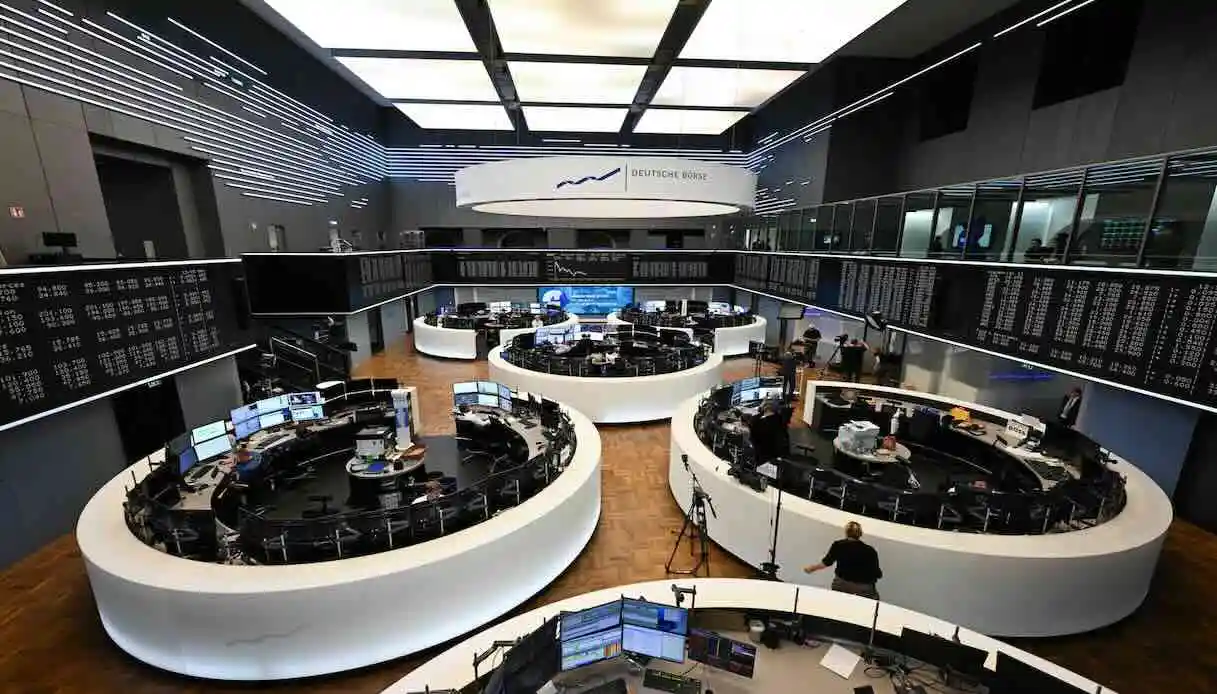
The failure of the peace talks between the United States and Iran in Islamabad has triggered a new escalation: President Trump announced on Truth that the US Navy will block all ships “entering or exiting” Iranian ports starting from Monday afternoon. The markets reacted immediately with the price of oil returning above 100 dollars, with Brent around 102 dollars a barrel (+7.3%) and WTI at 104 dollars (+7.7%). The news also had a negative impact on European markets, all in sharp decline: the worst performance was that of Frankfurt (-1.1%), followed by Milan and Paris (-0.9%). London’s loss was more limited (-0.4%).
Israel immediately sided with Washington. Prime Minister Benjamin Netanyahu declared Israel’s full support for the naval blockade, confirming full coordination between the two countries.
European reactions
European reactions, however, are fragmented. British Prime Minister Keir Starmer told the BBC that the UK “does not support the naval blockade of the Strait of Hormuz”, reiterating that London has only participated in “defensive actions” since the conflict began. However, Starmer underlined that the reopening of the Strait remains “the only way to bring energy prices down in the shortest possible time”.
France has announced an autonomous diplomatic initiative: President Macron announced that Paris “will organize with Great Britain, in the next few days, a conference with countries ready to contribute to a peaceful multinational mission aimed at restoring freedom of navigation in the Strait of Hormuz”. The mission will be “strictly defensive and distinct from belligerents.” Macron added that “no effort must be spared to quickly reach a solid and lasting solution to the conflict through diplomatic channels”, citing Iran’s “nuclear and ballistic activities” and Lebanon’s sovereignty among the issues to be addressed.
Spain expressed “maximum concern” over the American ultimatum. Defense Minister Margarita Robles defined the conflict as “madness, a senseless and illegal war” and hoped for the resumption of peace talks, while she rejected the threats of Israeli Prime Minister Netanyahu, according to which “Spain will pay a price” for its positions, ensuring that Madrid “will remain very firm in the defense of peace”. “We had an orientation debate in particular on the economic impact of the crisis in the Middle East. The closure of the Strait of Hormuz represents damage and freedom of navigation is of primary importance”, commented Ursula von der Leyen in the press conference after the meeting of the Commission on the crisis in the Middle East.
China and Russia: freedom of navigation and markets at risk
From China, Foreign Ministry spokesperson Guo Jiakun said that “the Strait of Hormuz is an important international trade route and ensuring its security and free movement is in the common interest of the international community.” Moscow predicted further negative repercussions on the markets: Kremlin spokesman Peskov said that the blockade “will continue to have a negative impact on international markets”, while refraining from more substantive comments due to the details still being unclear.