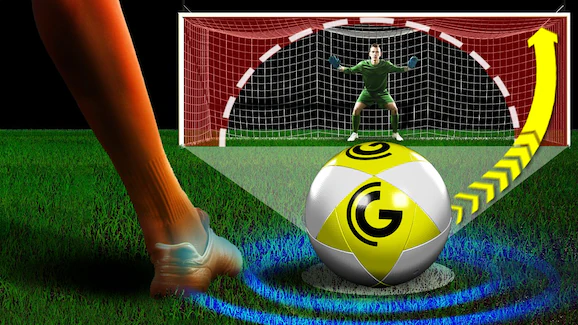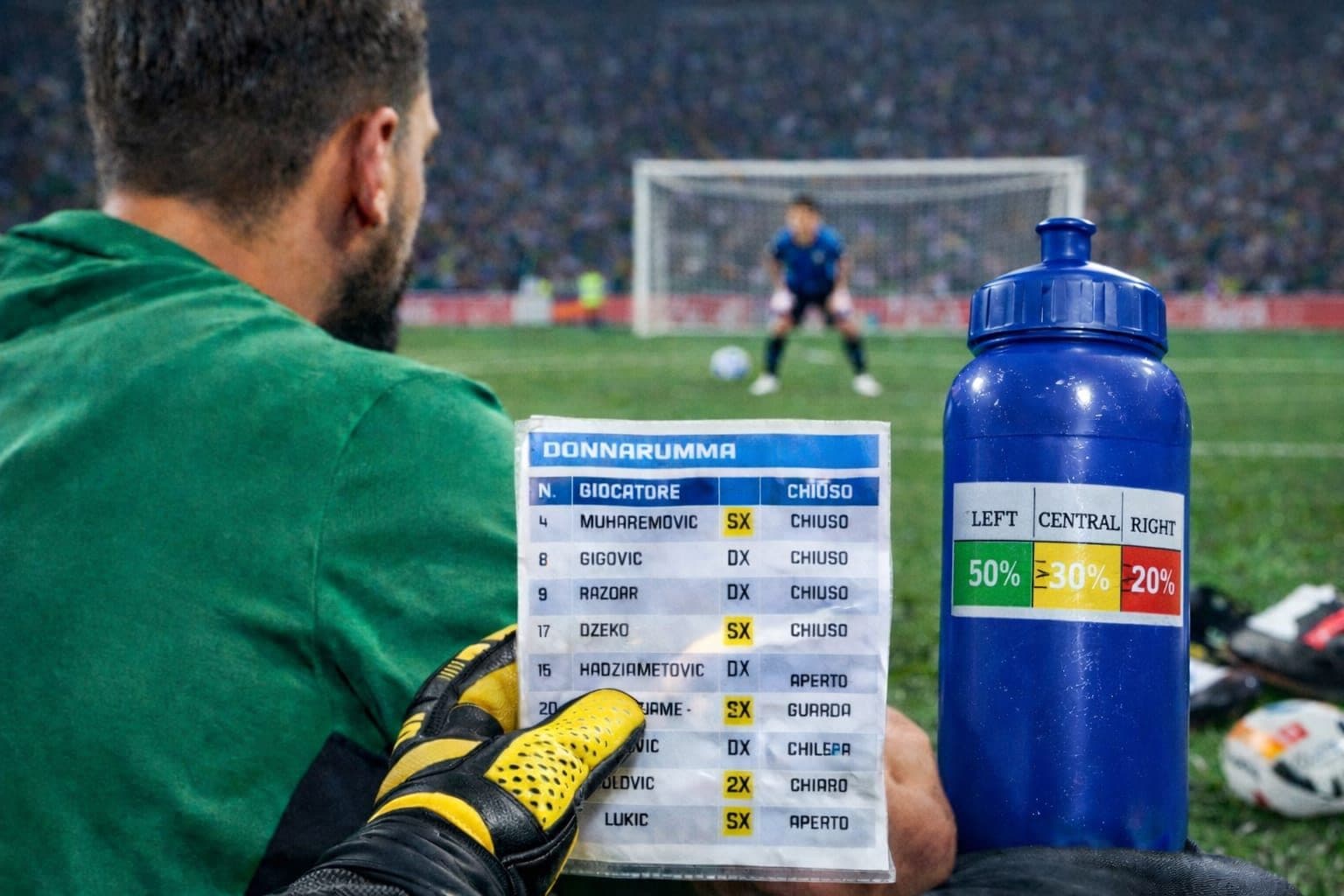
Gianluigi Donnarumma’s leaflet has gone viral, with annotated statistics and habits of Bosnia’s penalty takers used during the final of the qualifying playoffs for the 2026 World Cup which was tragically lost by our national team. A seemingly simple detail, but which tells a lot about how the way of preparing one of the most delicate moments in football has changed. But what is really behind a goalkeeper’s preparation for penalties? The statistics are merciless: a penalty is successful in the vast majority of cases, often up to 80%. Yet someone must remain there, on the line, with the task of trying to reverse these probabilities. How does a goalkeeper prepare? Today the answer has less and less to do with pure instinct and more and more to do with data analysis, study of opponents and psychological strategies.
Donnarmma’s penalty sheet: where it all comes from
The modern history of penalty preparation has a crucial turning point: the quarter-finals of the 2006 World Cup, Germany against Argentina. From the spot the Germans scored all four penalties, while Jens Lehmann saved two. The goalkeeper then declared that he had prepared a note on which he had studied, the day before, the movements of the South American players in the event that the match was decided on penalties.
That note, handwritten on a piece of paper in the hotel by the goalkeeping coach, contained precise information on every possible Argentine penalty taker. From Crespo (“long run-up/right, short run-up/left”), to Ayala (“wait a long time, long run-up right”), up to Leo Messi (“left”). Lehmann consulted them before each shot. Before the fourth penalty, that of Cambiasso, it is said that the goalkeeper leafed through the piece of paper without finding the name – Cambiasso was not listed – and yet Cambiasso made a mistake anyway, probably influenced by the goalkeeper’s gesture alone. The same sheet was auctioned for the record sum of 1 million euros.
There is also a psychological aspect that should not be underestimated: the gesture sends a message to the shooter, telling him “I already know where you will shoot”. This may be enough to put him in difficulty, make him hesitate or change his approach. Since then, that practice has become nearly universal among professional goalies.
Databases, water bottles and color codes: modern goalkeeper training
Over the last twenty years, the amount of information available to goalkeepers has grown exponentially. Clubs track every penalty taken by an opponent, building a database of preferred sides, shot heights and execution patterns. The analysis also includes the context: minute of play, score and pressure of the match, because a penalty taker can change habits depending on the situation. What was once a piece of paper written in pencil has now become a complex statistical profiling system.
An example is Jordan Pickford, goalkeeper for England and Everton. The notes have been transformed into a real database applied directly to his water bottle: next to the names of the opponents appear exact percentages indicating where each player has kicked previously, often accompanied by a color code — where green indicates the statistically most probable direction.
Also at Euro 2024, Pickford had a piece of paper with him during England’s quarter-final against Switzerland. The piece of paper contained the names of the Swiss penalty takers, the direction in which to dive and, sometimes, a short suggestion such as “stay” or “delay”referring to the time to dive. “Delay” means exactly what it sounds like: against those who watch the goalkeeper waiting for a signal, staying still for as long as possible forces him to decide without being able to latch on to a visual clue.
Why would the optimal strategy be to stay in the center?
However, there is a paradox. Even with the best data, the statistically most effective strategy for the goalkeeper would be only one: staying stationary in the center. Yet almost no one does.
The analysis of 286 penalty kicks in the world’s top leagues highlighted that, given the probability of the direction of the shot, the optimal strategy for goalkeepers would be to stay in the center of the goal. Despite this, the vast majority of goalkeepers dive in one direction before the ball is even kicked. Why?
The answer comes from psychology: it’s called action bias. Goalkeepers explain this behavior through norm theory: the norm is to dive, and a passive choice would cause them a negative emotional state if they conceded a goal. In practice, by diving, the goalkeeper would have the mitigating circumstance of having at least tried. Conceding a goal while remaining immobile, even if statistically it was the right choice, is psychologically much more difficult to accept both for the goalkeeper and for the coach and also for the public.
Psychological warfare: distract, slow down, make you nervous
Studying the data is only half the job. The other half is played on a mental level, during those seconds that separate the referee’s whistle from the execution of the shot. The goalkeeper can carry out small disturbing actions to interrupt the routine of preparing for the opponent’s shot. In the Argentina-France final at the 2022 World Cup, Emiliano Martinez did not stay on the line and threw the ball away from the spot, causing the referee to warn him and thus slowing down the shooting session. The Frenchman Tchouaméni, unnerved by the behavior of the opposing goalkeeper, went out of his shooting routine and missed the penalty. Another example of this is Jerzy Dudek’s “ballets” on the goal line during the 2005 Liverpool-Milan Champions League final.
This mechanism even has a technical name, borrowed from sports psychology: the Warm-up Decrementor that sudden drop in concentration that occurs when a routine is interrupted.
Then there is the reading of body language. In modern preparation, we study micro-signals that emerge in the few moments before the shot. For this reason the training sessions are increasingly specific: balls kicked from close range, lights that suddenly turn on to stimulate the reaction, simulations of penalties with reduced times.
Despite all this preparation, the numbers remain clear: only between 12% and 16% of penalties are saved, a sign that even with data, study and strategy the goalkeeper continues to start at a clear disadvantage.