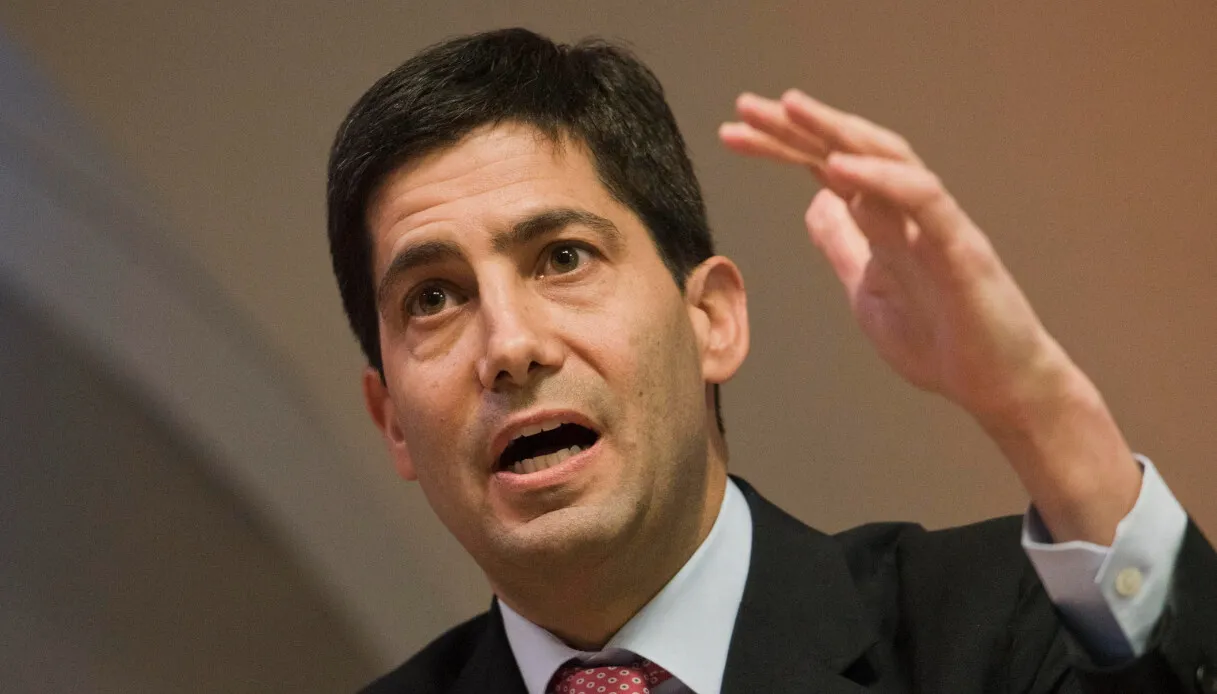
The future President of the Fed Kevin Warsh (at least for now…) reiterates that he will not be influenced by the White House in monetary policy decisions and defends himself from criticism from Democratic senators regarding his links with the world of high finance and with some “smoky” items of his personal wealth.
Warsh yesterday made his first formal appearance before the US Senate Banking Committee, which will have to formalize his nomination as Fed President, following Powell’s exit on May 15th. A thorny hearing in which Democratic senators did not spare direct attacks, which put his election at risk, while President Donald Trump warned his favorite candidate to expect lower interest rates when he takes the helm.
What Warsh said about independence
“The president has never asked me to commit to any specific interest rate decisions in any of our discussions, nor would I have agreed to do so,” Warsh said at a Senate Banking Committee hearing, adding that he was not Trump’s “puppet.” “If I am confirmed as President of the Federal Reserve,” he concluded, “I will be an independent actor.”
A clarification that was somehow nullified by the statements of Trump, who just yesterday reiterated his aspiration to see interest rates cut and stated that he would feel “disappointed” if Warsh did not do so when he takes charge of the US central bank.
The promised reforms
Warsh also explained to the American senators his vision of the new Fed, outlining the line of reforms he intends to carry forward. First, the future president stated that there is a need for a new framework to address persistent inflation, which has seen a surge between 2021 and 2022, and noted that today prices have certainly not exploded, but inflation is perceived as high by American consumers.
“Over the last few years, especially post-Covid, the Fed has missed the mark, and we’re still dealing with the monetary policy mistakes made in 2021 and 2022,” Warsh said, adding that “when you let inflation go up, it’s harder to bring it down.”
Hence the need for a “change of direction in the conduct of monetary policy”. Warsh, in particular, criticized the system which is based on forward guidance and dot plots, explaining that the Fed should wait for meetings to decide and not be conditioned by expectations.
Warren’s frontal attack puts the nomination at risk
The day did not prove to be at all easy for the future number one of the Fed, who was immediately attacked by Senator Elizabeth Warren, the main Democratic representative of the Commission, regarding his personal wealth and his independence from President Donald Trump.
Warren said Warsh is “particularly unsuited” to the role of president because of his penchant for risky assets such as credit default swaps and the more complex securitizations that led to the 2008 financial crisis.
Warren also questioned Warsh about his large fortune and his ties to investor Stanley Druckenmiller, who allegedly received compensation of more than $100 million in stakes related to his work. But Warsh declined to answer that question, saying he was bound by confidentiality regarding the source of these funds.