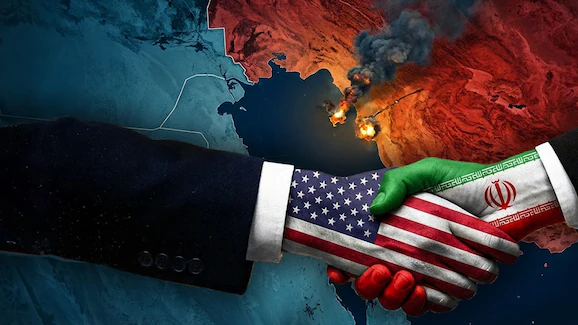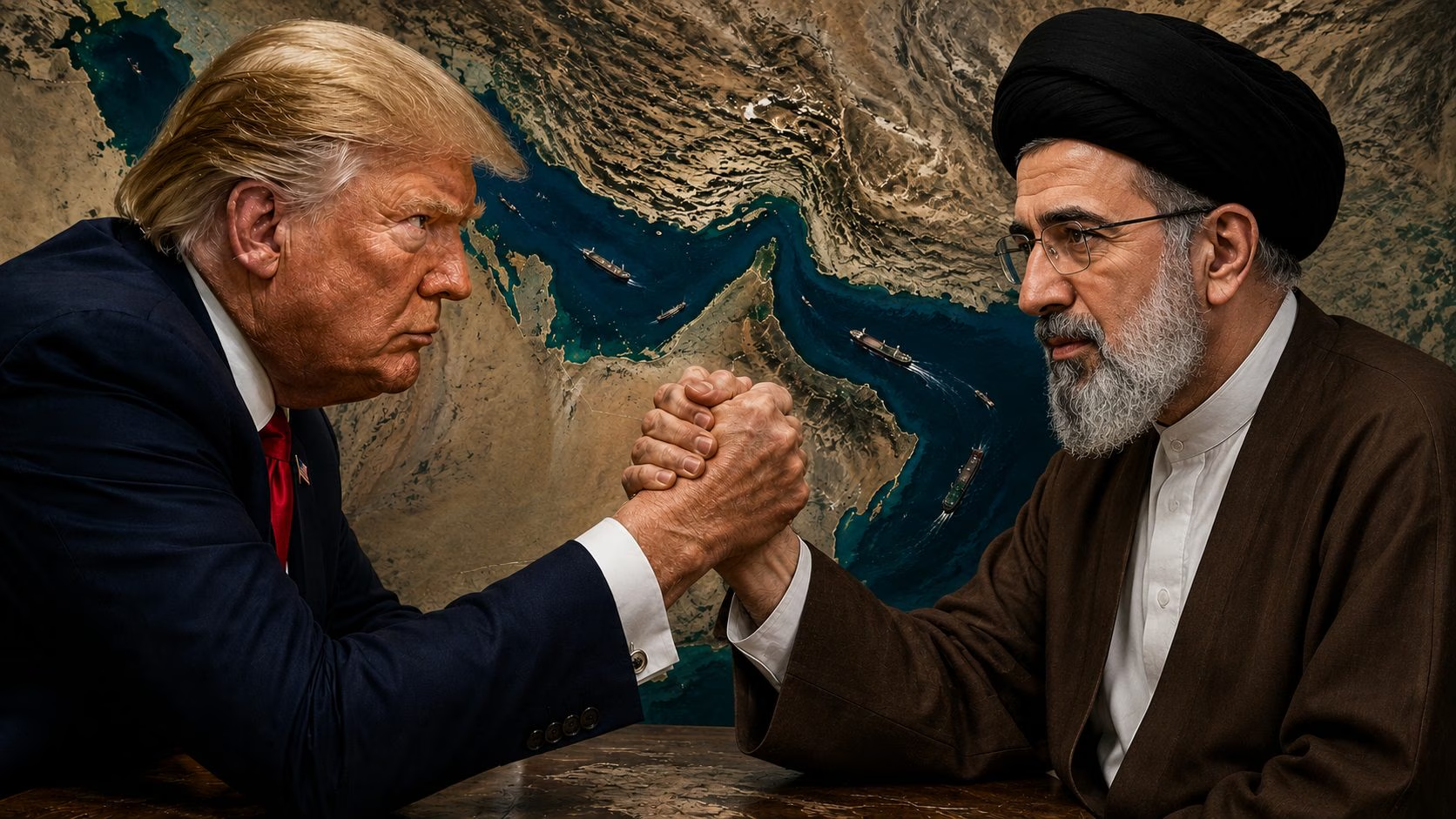
Continuously announced and then denied, the definitive agreement between Iran and the United States still seems like a diplomatic mirage. From the wall to wall on nuclear power to Israeli operations in Lebanon, up to the energy blackmail on the Strait of Hormuz, there are still too many geopolitical issues that keep the end of hostilities away.
A strategic dead end which, amidst continuous under-the-radar attacks, risks forcing Washington to take a dramatic step backwards.
The map of the dead end: the five knots to be resolved
To understand why diplomacy is hitting a wall, we have to imagine the negotiating table as a huge geopolitical traffic jam. It’s not about filing a signature on a sheet of paper, but about unraveling five knots that travel in parallel:
- Trust destroyed: the United States offers negotiations but continues to attack on the field, while experiencing a profound internal crisis in its own diplomatic corps.
- The nuclear abyss: Washington demands the atomic dismantling of Iran; Tehran considers it strategic suicide.
- The economic tug of war: we are no longer just discussing unblocking old bank accounts, but actual war compensation.
- The shadow of Lebanon: Iran won’t sign anything if Israel doesn’t stop in Lebanon, creating tension that is even fraying relations between Washington and Tel Aviv.
- The Strait of Hormuz: it is the real ace in the hole for Iran, which has become the center of negotiations.
Let’s see in detail why each of these points has become an insurmountable wall.
The bluff of the agreement and the “betrayal” on the timing
The main reason why no progress has been made is that the raw material of diplomacy is missing: trust. There was talk of a “Memorandum of Understanding” mediated by Pakistan (with the idea of a 60-day truce to reopen the Strait of Hormuz in exchange for the release of economic funds for Iran).
Yet the reality was very different. On the one hand, land denials from Tehran: the Iranian authorities have in fact denied the existence of an armored agreement, defining the American positions as too unstable.
On the other, the US military move: Iran does not trust Washington also for a question of timing. The United States gave the green light to heavy military operations (Operation Midnight Summer – Epic Fury) just as the first diplomatic contacts were underway. For Iran to wage war while claiming to negotiate is evidence that the White House is not speaking in good faith.
As reported by an analysis by Reuters, the United States is at the same time also experiencing a serious internal diplomatic crisis, after the Trump administration fired dozens of diplomatic experts over the previous months, thus making the successful outcome of the negotiations even more difficult.
Nuclear: the disagreement is total
If we go into the merits of the requests, the table immediately jumps. The fulcrum of everything remains the Iranian nuclear program, and here the distance between the two superpowers is an unbridgeable abyss.
- What the US wants: The Trump administration has hardened its position by demanding a drastic clause: the total and verifiable destruction of all highly enriched uranium so far from Iran.
- What Iran responds: For Tehran this request is a humiliation and an unacceptable unilateral disarmament. Iran has no intention of giving up its only real geopolitical card without ironclad guarantees.
This wall against wall arises from the “Original Sin” of 2018, when Trump tore up the 2015 nuclear agreement signed by Obama. Iran today says: “Why should we destroy our uranium based on the word of a government that has already violated its covenants in the past?”. The disagreement on the topic is, quite simply, total.
The economic wall: sanctions and compensation
If the disagreement on nuclear power is total, the economic one is no different. The rumors about the negotiations simply spoke of “unlocking Iranian funds frozen abroad”, but the reality that emerged from diplomatic analyzes is much more complex and sees the two parties entrenched in opposite positions.
- Iran’s line: Tehran is no longer satisfied with the promise to ease trade sanctions. The Iranian government demands formal economic compensation (reparations) from Washington for all the financial damage suffered from 2018 to today, i.e. since Trump tore up the old agreement. For Iran, those unilateral sanctions were an illegitimate act of “economic warfare” that devastated their currency and their population.
- The US line: For the White House, paying “reparations” to Iran is out of the question. Accepting this request would be equivalent to an admission of historical and geopolitical guilt that no American president – least of all Trump – could ever sign or justify to his electorate.
The United States seems willing at best to a temporary and conditional suspension of some sanctions, while Iran wants written guarantees and compensation. This tug of war transforms the economic aspect into an insurmountable second wall.
Lebanon’s shadow: the region’s geopolitics and allies
Complicating an already impossible picture is the sensational short circuit of regional geopolitics. Iran leads a network of allies spread across the Middle East, the so-called proxies, of which Hezbollah in Lebanon is the main pillar.
Iran has placed a strict condition on the White House: there will be no signature on freezing the war unless Israeli military operations in Lebanon first stop.
The blaze holds the diplomacy of the White House in check, caught between the peremptory demands of Tehran, the refusal of Hezbollah and the military intransigence of Tel Aviv. A situation so tense that it made Trump lose patience even towards Netanyahu, recently defined by the American president as a “crazy”.
On June 5, while a possible truce between Lebanon and Israel seemed imminent, Hezbollah rejected the peace proposal, causing the negotiations to fail again.
The Strait of Hormuz
The United States today seems incapable of dominating the scene as it once did. Not only has the initial prospect of a regime change in Tehran completely collapsed under the blows of reality, but the very agenda of the negotiations has been overturned. Thus in just a few months we went from the hypothesis of regime change to the American President’s willingness to meet Ayatollah Mojtaba Khamenei.
Today, at the center of the negotiations is no longer the total disarmament of Iran and regime change, but the simple reopening of the Strait of Hormuz – an element that the White House took totally for granted before the start of the conflict. This shifts the balance heavily.
It means that if and when the United States actually sits down to sign a truce, it will inevitably have to come to a much less harsh and more disadvantageous compromise than the one obtained by Obama in 2015. A sensational paradox for the Trump administration: having set out eight years ago to destroy an agreement deemed “too weak” and today finding itself having to accept an even worse one, in order to restart the world economy.
The “invisible” war: low intensity exchanges of fire
While diplomats laboriously seek a channel for dialogue in Islamabad, military initiatives continue, albeit at low intensity. The official truce exists only in appearance: in practice, the United States and Iran continue to exchange blows on a daily basis in what experts define as an exhausting war of attrition, including psychological.
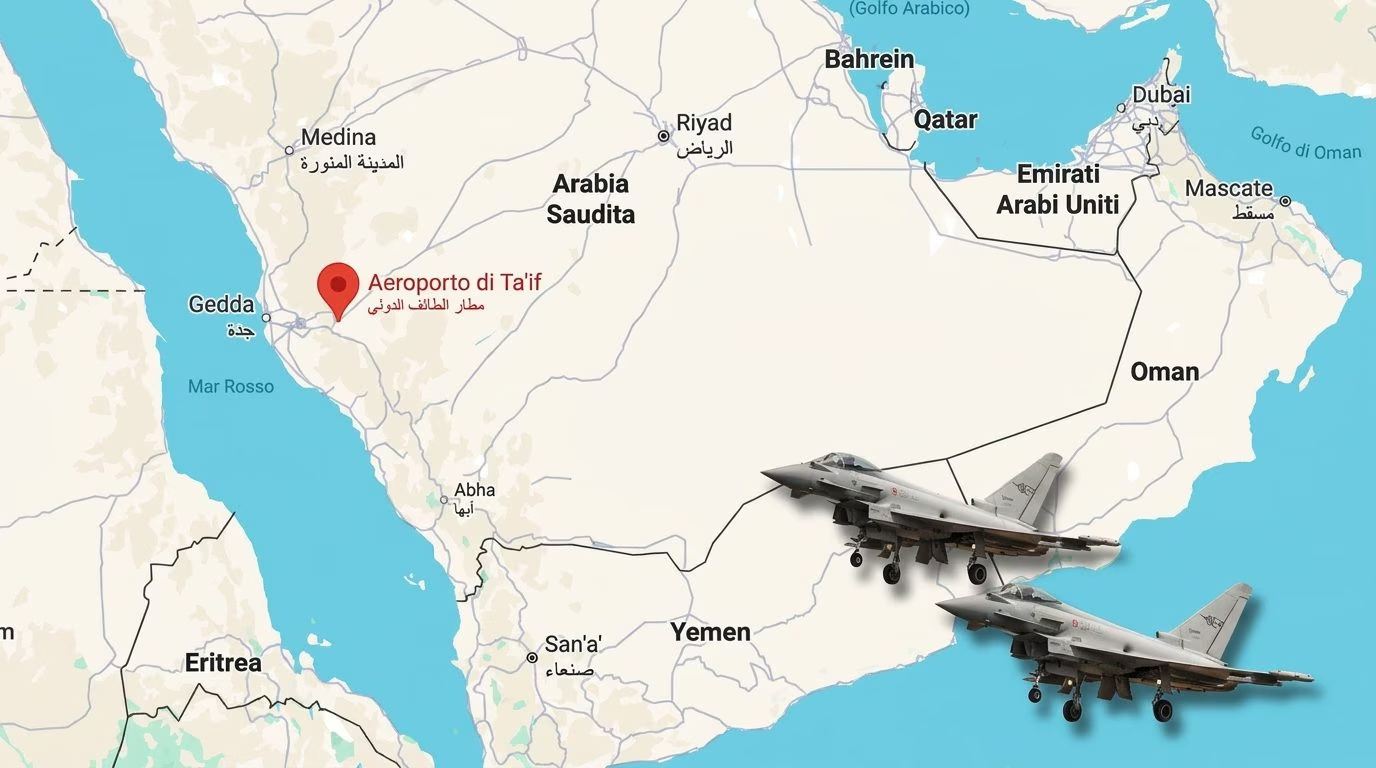
The United States keeps the pressure high along the Iranian coast, with the US Navy’s CENTCOM command. US fighter jets conduct targeted strikes to degrade enemy radar systems and target drone launch sites on the Strait Islands and in Goruk. Washington’s goal is to “cut the eyes” of Tehran to prevent it from monitoring maritime traffic, reducing control over the Strait of Hormuz.
Iran does not stand by and responds blow for blow by exploiting the tactic of asymmetric warfare. In recent weeks, Iranian forces have targeted Western infrastructure and supply lines, managing to hit even an allied air base in Kuwait with ballistic carriers and kamikaze drones, causing injuries to US personnel.