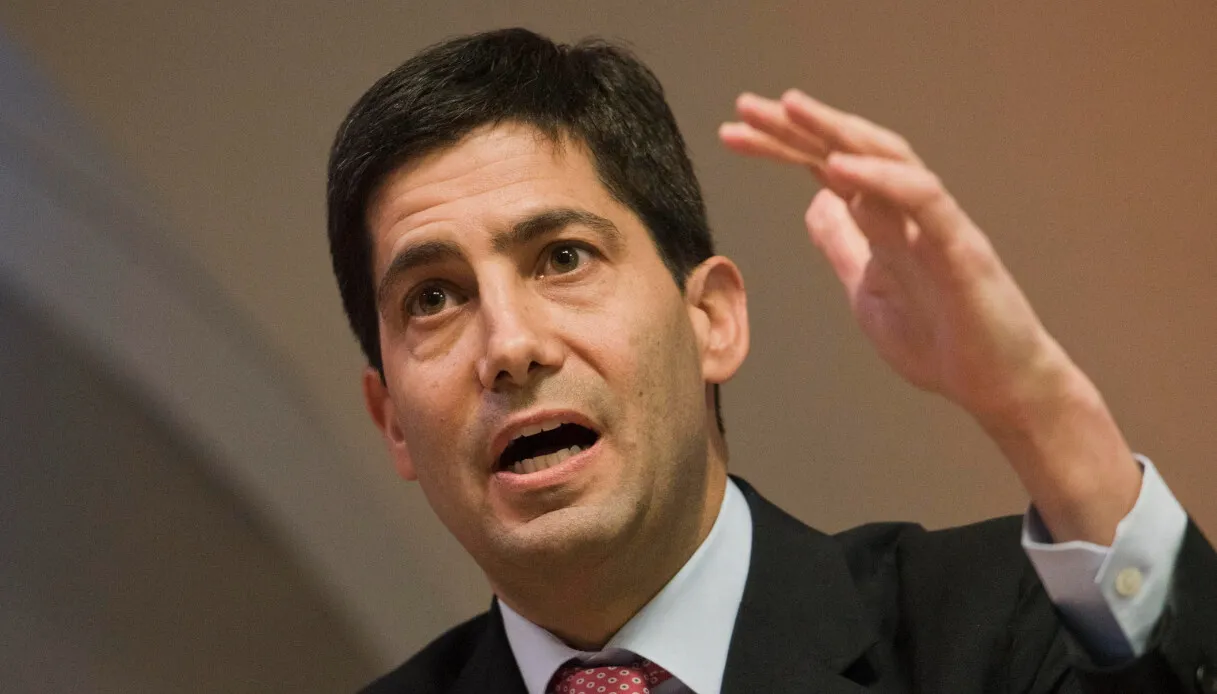
The era of Kevin Warsh at the Federal Reserve officially opens, with the first FOMC meeting this evening under his presidency destined to represent an initial test for the new course of the American central bank and for relations with Wall Street and President Donald Trump.
The context in which Warsh debuts is complex: inflation remains above the target, while geopolitical tensions and the energy crisis linked to the conflict in Iran continue to influence prices and market expectations. Oil dynamics remain central, also in light of the prospects linked to the reopening of the Strait of Hormuz, which contributed to the recent volatility in crude oil prices.
Warsh, considered by many to be a “hawk”, arrives at the helm of the Fed with the intention of also intervening on the institutional communication front, reducing the frequency of statements from board members and limiting the use of forward guidance, considered excessively binding at turning points.
Prudent Fed: rates firm and focus on language
No changes to rates are expected at the meeting, which should remain in the 3.50%-3.75% range. The real focus will therefore be the new president’s press conference, with investors looking for guidance on the future trajectory of monetary policy.
The US macroeconomic framework remains characterized by resilient growth, a solid labor market and inflation still above 2%. In this context, the Fed appears oriented towards prudence, while the internal debate focuses on the risk of new inflationary pressures versus the possibility of a more marked slowdown in the coming months.
Global markets: energy, rates and geopolitical risk
The energy theme remains one of the main drivers for global assets. The recent drop in oil prices, linked to expectations of the stabilization of the situation in the Middle East, has contributed to mitigating inflationary pressures, but uncertainty about the timing of normalization remains high.
In parallel, the stock market continues to show strong sectoral dispersion, with the technology sector supported by the theme of artificial intelligence and the leadership of large capitalizations.
Fed, obvious decision: analysts’ readings
Insiders underline that today’s meeting has a more communicative than decision-making relevance, with the markets focused above all on the indications that will come from the press conference of the new Fed president.
TwentyFour Asset Management (Vontobel) believes that the central bank can maintain a more restrictive tone than initially expected, while confirming the status quo on rates. According to the manager, the Fed “will keep rates unchanged today, but the tone of communication will become sufficiently restrictive to suggest the possibility of a hike in September”. The profile of Kevin Warsh is also underlined, considered “hawkish”, also in light of the past: “in 2011 he resigned to protest against QE2 and still today he is a strong supporter of the reduction of the Central Bank’s balance sheet”.
Carmignac also highlights how the macroeconomic framework does not justify an immediate change in monetary policy. The management house observes that “at first glance, the US economy does not appear to justify an easing cycle”, recalling that growth, inflation and the labor market remain at solid levels. However, according to the company, the structure of growth appears increasingly concentrated on a few drivers, in particular technology and artificial intelligence, making the picture more fragile than the overall data suggests.
In this context, according to Carmignac, the Fed should confirm the status quo, while investors’ attention will shift from the decision on rates to the communication of the new president. “The new president’s press conference could be more important than the decision itself, because it will offer indications on continuity or discontinuity with the Fed’s previous line.”
Finally, several strategists underline how long-term bond yields remain surprisingly low compared to the picture of growth, inflation and public deficits, signaling a market still in search of a more stable balance.