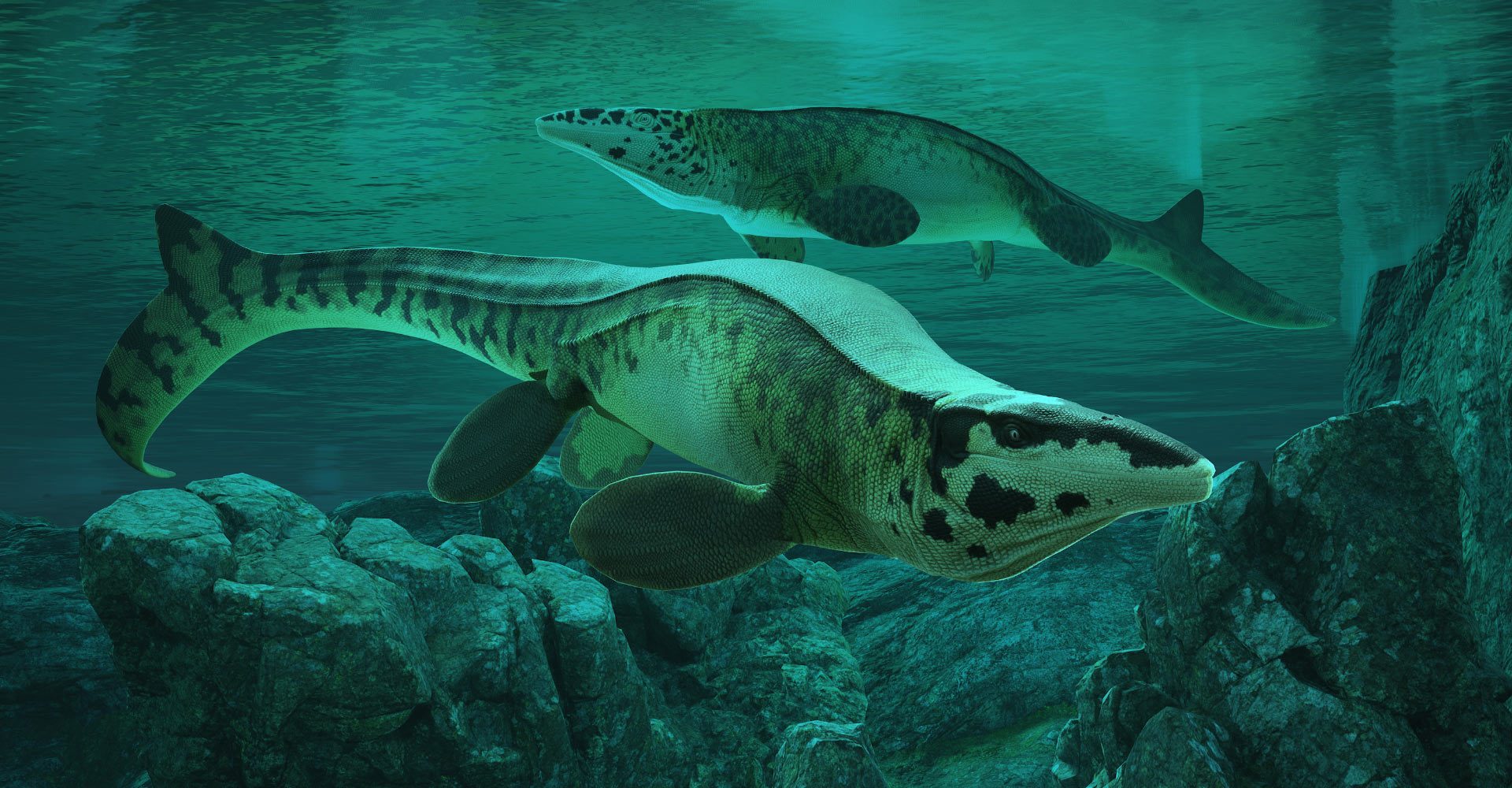
A new species of prehistoric marine reptile has been described in Texas, United States. It was not a dinosaur, but a mosasaur: a marine reptile related to modern lizards and monitor lizards. Now a new study published by Bulletin of the American Museum of Natural Historywith Amerlia R. Zietlow as the leader, identified a new species belonging to this group, named Tylosaurus rex (i.e. king of the tylosaurs).
The name deliberately recalls the famous one Tyrannosaurus rex: according to researchers, this animal represented one of the absolute super predators of the Western Interior Sea, the enormous expanse of water that divided North America into two continents in the Cretaceous.
Mosasaurs dominated the seas of the Late Cretaceous and could reach impressive sizes. The new Texan species is distinguished by an enormous skull, particularly robust jaws and serrated teeth, characteristics that suggest a superior bite power compared to other known species of Tylosaurus. Some studied specimens exceed 13 meters in length, making it one of the largest mosasaurs ever discovered.
The discovery was not made in a fossiliferous deposit, but rather from the re-examination of fossils found in Texas since the 1970s. Many of these remains had been attributed to Tylosaurus prorigera well-known species from North America. However, thanks to a detailed revision of the skeleton and a new phylogenetic analysis, scholars have recognized a series of unique characteristics: a particular conformation of the vertebrae, of the mandibular quadrate and of the muscular insertions indicate that it was an animal distinct from Tylosaurus proriger.
One of the most interesting aspects of the study concerns gigantism. The researchers point out that for a long time the largest mosasaur specimens were simply interpreted as older individuals of already known species. The case of Tylosaurus rex instead, it shows that some differences attributed to growth could instead hide species that are not yet recognized.
The animal lived between 81 and 79 million years ago, in a marine environment rich in ammonites, bony fish, sharks and other aquatic reptiles. In that ecosystem it probably occupied the top of the food chain. Its elongated jaws and powerful neck muscles suggest it was a predator capable of capturing large prey and perhaps even other smaller mosasaurs.
The discovery also confirms how important Texas was to Cretaceous marine biodiversity. Although large mosasaurs are often associated with the famous deposits of Kansas, also in the United States, the Texan fossiliferous deposits are revealing a much more varied fauna than known to date. According to the authors, other gigantic marine reptiles preserved in museums could belong to still unknown species.