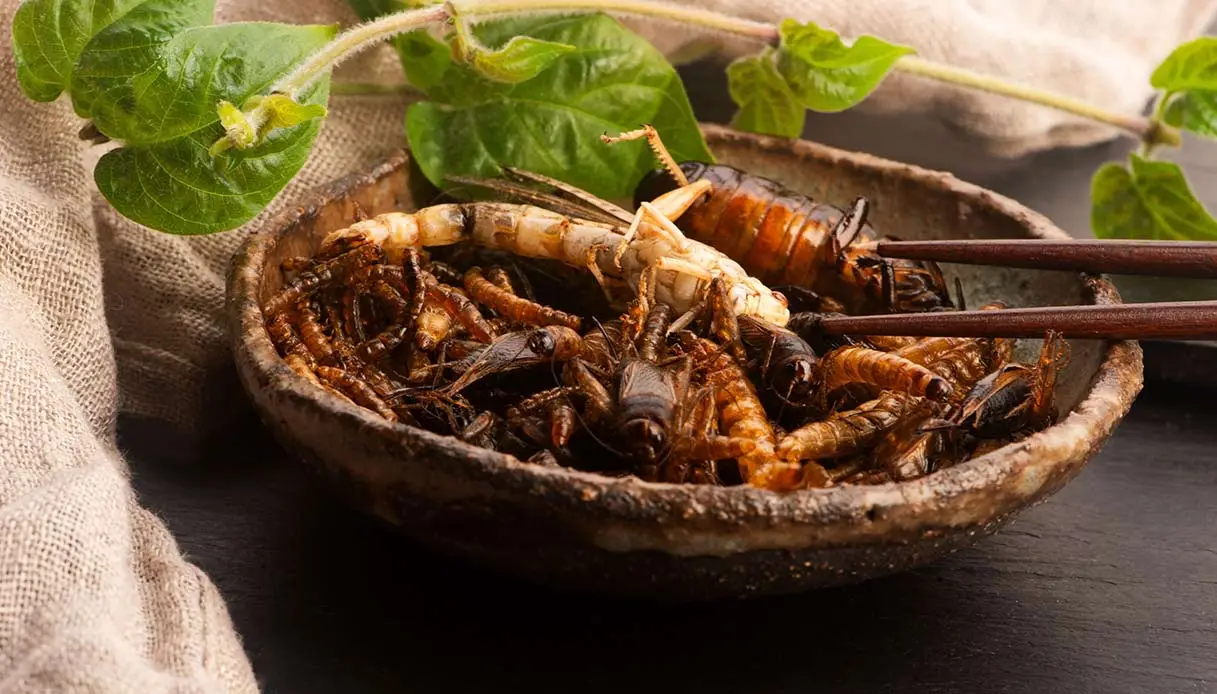
The request for sustainability says it clearly. Foods containing insects or flours derived from them could increasingly become an alternative to traditional animal protein sources also on the basis of the recognition of these foods as a nutritional source that the European Union authorized in 2018. Among the sources “permitted” for human consumption there would be yellow locust larvae, migratory locusts, house crickets and lesser locust larvae, sold frozen, dried or even in powder form. If everything is in order on the authorization front, however, there are still doubts about the possible response from consumers.
And precisely to explore this aspect comes a study published in Journal of Neuroscience, Psychology, and Economicsaccording to which there are many prejudices, but they can be overcome: research shows that those who hesitate to try insect-based foods might instead appreciate the experience more than they expect and even think about expanding their diet in this sense.
Emotional reactions in evaluation
The research examined consumers’ emotional and physical reactions to insect-based foods, which are increasingly seen as a sustainable alternative to traditional animal protein sources. It was coordinated by Andreia CB Ferreira of the University of Beira Interior, Portugal. The investigation combined traditional surveys with neuroscience techniques that measured participants’ brain activity and heart rate while they tasted insect-based food products.
The study involved 38 adults aged between 18 and 55 who had never tried insect-based foods before. Participants first filled out a questionnaire about their knowledge and opinion regarding insect products. Next, they tasted both an insect-based protein bar and a granola bar, while the researchers recorded their physiological responses via electroencephalography (EEG) and electrocardiography (ECG).
The researchers expected the participants to have poor knowledge of insect-based foods, to prefer the granola bar, and to show stronger physiological reactions to the insect-based product. Instead, the results revealed that people were often more curious and receptive than expected. As if to say that tasting helps to overcome psychological blocks.
How important are expectations?
To test whether participants’ expectations influenced their reactions, some were told the truth about which bar they were eating, while others were told they were eating a granola bar when in fact it was an insect bar. On the physiology front, it was seen that participants generally tend to pay more attention when consuming insect-based bars. The researchers also observed an increase in heart rate during the tasting, which they interpreted as a sign of increased excitement and attention.
Notably, these patterns arose even when participants did not know they were eating an insect product, suggesting that responding was not driven solely by expectations about insect consumption. After tasting both products, participants were directly asked which bar they preferred. Overall, participants were more likely to choose the insect-based protein bar over the cereal-based one.
Conclusion: Direct exposure, such as tasting samples, can play an important role in reducing hesitancy towards insect-based foods and helping consumers to accept them more readily. But it’s not enough. The researchers point out that attention must be paid to communication which should not be limited to presenting insect-based foods as ‘new’, but also clearly highlight their potential nutritional and sustainability advantages compared to other protein alternatives.
Not only that: the tasting strategy is fundamental. Unfamiliar foods may be judged differently after they have actually been tasted. In this study, participants often expressed uncertainty or surprise when discussing insect-based foods before tasting them, yet many reported positive reactions after trying the product.