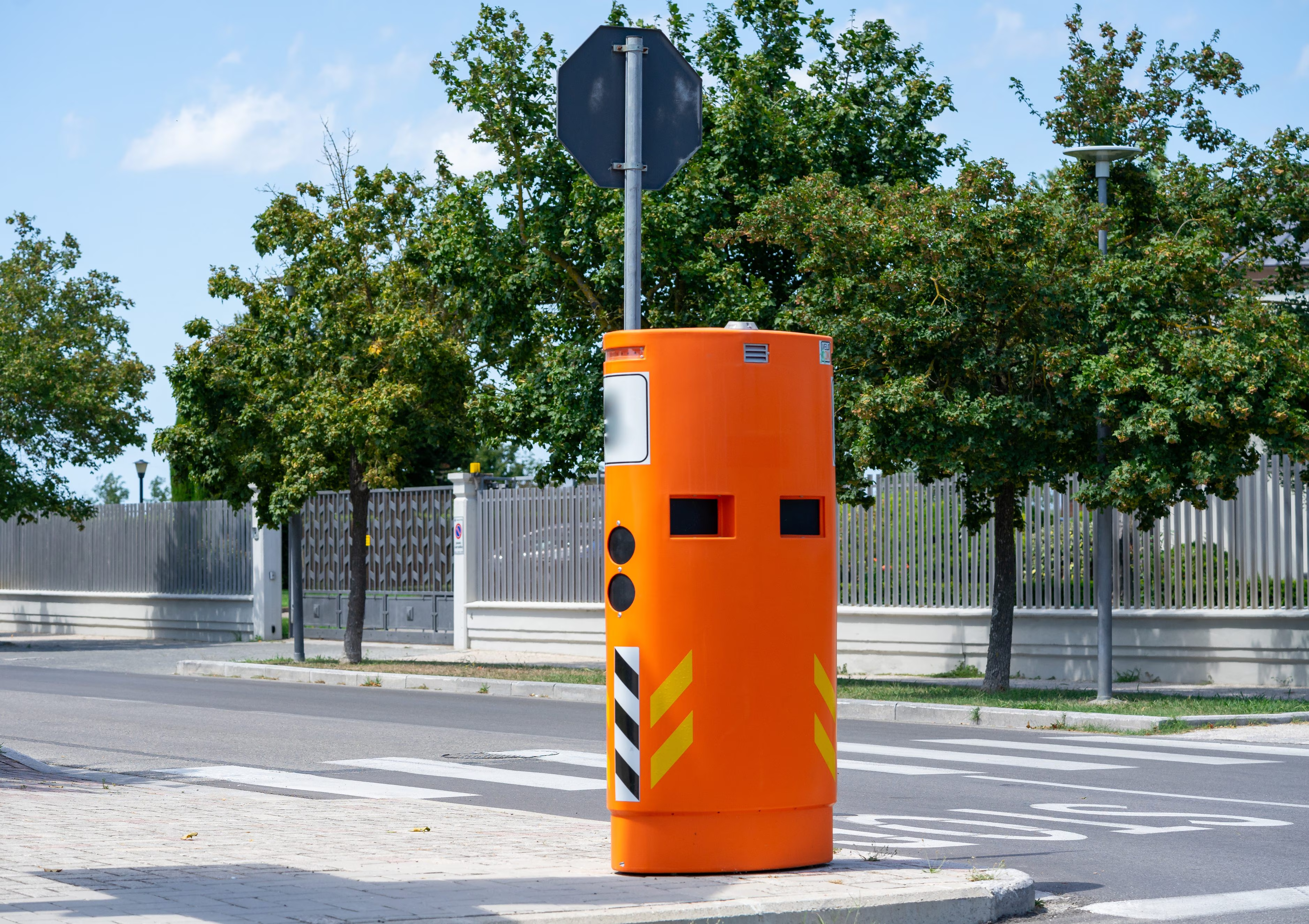
The new decree on speed cameras is officially in force: for the first time, Italy has more precise rules on how devices that detect speed must be approved, calibrated and checked. Behind what seems like a technical detail there is a regulatory void that has lasted for over thirty years. The Highway Code, since 1992, requires that each device be “duly approved” so that the fines are valid, but the legislation had not yet specified the rules for obtaining that approval: the devices continued with simple ministerial approvals.
A hole that has caused appeals to explode in recent years, thanks to a long series of rulings from the Supreme Court according to which approval and approval are not the same thing at all. Overall, out of a total of approximately 4,000 speed cameras, 850 were turned off because they were non-compliant.
Now the decree of the Ministry of Transport – which came into force on 12 July – tries to bring order: let’s see how to understand if the fine received actually comes from an approved speed camera.
What changes with the new decree on speed cameras
The decree signed by Minister Matteo Salvini on 9 June was published in the Official Journal and came into force on 12 July: for the first time it establishes which technical requirements are needed, who issues the approval and with which procedures. Each new model of speed camera will have to obtain it before being installed and each device will have to pass an initial calibration and periodic checks at least once a year: if the certification expires, the device can no longer be used to fine.
The management of images also changes, to be protected with encryption and digital signature, with the faces of the people on board obscured in the front photos. Of the approximately 4,000 devices registered in Italy, approximately 3,150 are considered already compliant, while 850 remain turned off until the manufacturers present the missing documentation.
The innovations also concern the precision of these detectors in measuring the speed of vehicles. In particular, the correct association of speed with the detected vehicle must reach at least 95%, a threshold which is also foreseen for image acquisition and license plate recognition.
During the homologation tests, for speeds up to 100 km/h the value recorded by the device must not differ by more than 3 km/h compared to that measured by the sample instrument. Above 100 km/h, the limit threshold is set at 3% of the speed.
How to check if the device is approved and the fine is compliant: the appeal
At this point, how to check if the possible fine comes from an approved speed detector? The first place to look is the Ministry of Infrastructure website, at velox.mit.gov.it/dispositivi: by entering the brand, model or serial number shown on the report you can see if the device is registered and what approval or homologation details it has.
It is also useful to check the website of the competent municipality, which should publish the list of speed cameras in the area; if information is missing, you can request access to the documents. If the device does not appear in the list, or if the fine was issued by an approved device, the report can be contested: the decree, however, is not retroactive. The appeal must be presented within 60 days to the prefect, or within 30 days to the justice of the peace, attaching the evidence collected.