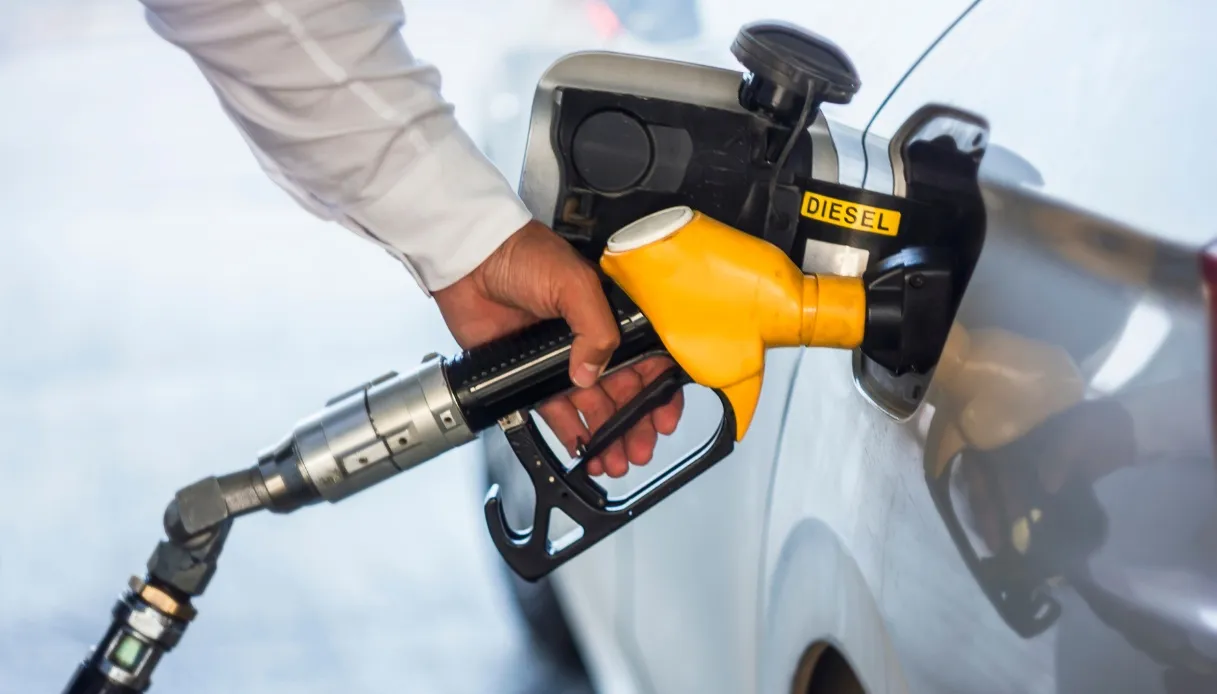
The price of diesel starts to rise again, while the temporary cut in excise duties has failed to offset the effects of the fiscal realignment between petrol and diesel. The result is a clear increase in costs at the pump, which will weigh in particular on the transport sector and on the entire price chain.
The declared objective of the intervention is to initiate a fiscal rebalancing between petrol and diesel, consistent with environmental objectives, in a context of strong international price volatility.
How much petrol and diesel are increasing
With the halving of the excise duty discount, which goes from around 24 cents to 12 cents per liter (VAT included), the average price of diesel in self-service mode will rise to around 2.09 euros per litre. The numbers at the pump speak for themselves and these figures are on a national scale, obviously. And on the highway? We are talking about 2.18 euros per litre. Simply put, for a 50-litre tank, the increase translates into around 6.10 euros more than before.
Codacons has denounced the direct impact on motorists’ pockets, estimating that on an annual basis, for those who travel approximately 15,000 km, the increase in prices could translate into an additional expense of several hundred euros. The measure was also criticized by the National Consumers Union, which defined it as insufficient to protect citizens, in a context of energy prices that is still very unstable.
The approach of energy analyst Davide Tabarelli is different, according to which the reduction of the discount is justified by the drop in raw material prices recorded in April. In fact, if the price of crude oil falls, the subsidy loses its raison d’être. To explain better, compared to May 2016, the price of diesel increased by 56.3%. Without the Government’s containment measures, growth would have been 75.5%. Italy is now in sixth place in Europe among the countries with the most expensive diesel, behind the Netherlands, Denmark, Finland, France and Belgium.
The temporary cut in excise duties was necessary to limit the impact of energy prices on the bills of companies and citizens. What is taken away on one side, however, is added on the other. In fact, the reduction in excise duties on petrol corresponds to an equivalent increase in those on diesel.
In practical terms, this means:
- slightly cheaper petrol than in previous years;
- diesel progressively more expensive by around 4.05 cents per litre.
Because the price of diesel increases more
The rise in diesel prices is linked to structural factors in the energy market. Diesel remains the most used fuel for freight transport and logistics, making it particularly sensitive to demand and changes in international energy costs.
There are three main elements that matter:
- the realignment of excise duties between petrol and diesel to intervene on environmentally harmful subsidies;
- the strong demand for diesel in the transport sector;
- the volatility of prices of refined products on international markets.
The result is a greater exposure of diesel to increases compared to petrol, with immediate effects on companies’ operating costs.
Consumers don’t really benefit from the excise tax cut
The temporary cut in excise duties had a limited impact both in terms of duration and intensity, weighing enormously on state coffers. The reduction, of around 20 cents per liter in the most acute phases of the intervention, does not change the price dynamics.
According to an analysis published in Scottish Journal of Political Economythe effectiveness of fuel tax reductions depends on the level of competition in the distribution market. Looking at the 2022 excise duty cut, we found that only part of the reduction is reflected in final prices at the pump.
On average, around three-quarters of the tax discount is passed on to consumers, while the remainder is absorbed along the supply chain. However, the figure varies significantly depending on local conditions: in areas where competition between distributors is higher, the benefit can reach up to 80%, while in territories where there are fewer distributors the transmission of the reduction can even fall below 70%.
This means that an apparently uniform measure such as cutting excise duties produces very different effects depending on the capillarity of diffusion of fuel pumps. In the absence of adequate competition, a portion of the tax benefit risks not reaching consumers.
An equilibrium that is still unstable
The temporary reductions in excise duties seek to contain the immediate impact of price increases on consumers and the supply chain, but the fiscal realignment process pushes in the opposite direction, with a significant increase in the price of diesel.
Interventions on excise duties produce partially predictable effects, while the price of diesel continues to represent one of the main items of pressure on costs for families and businesses.