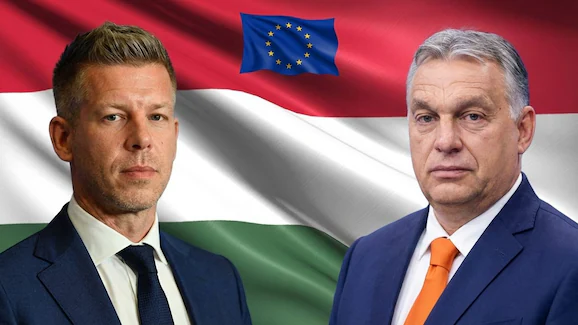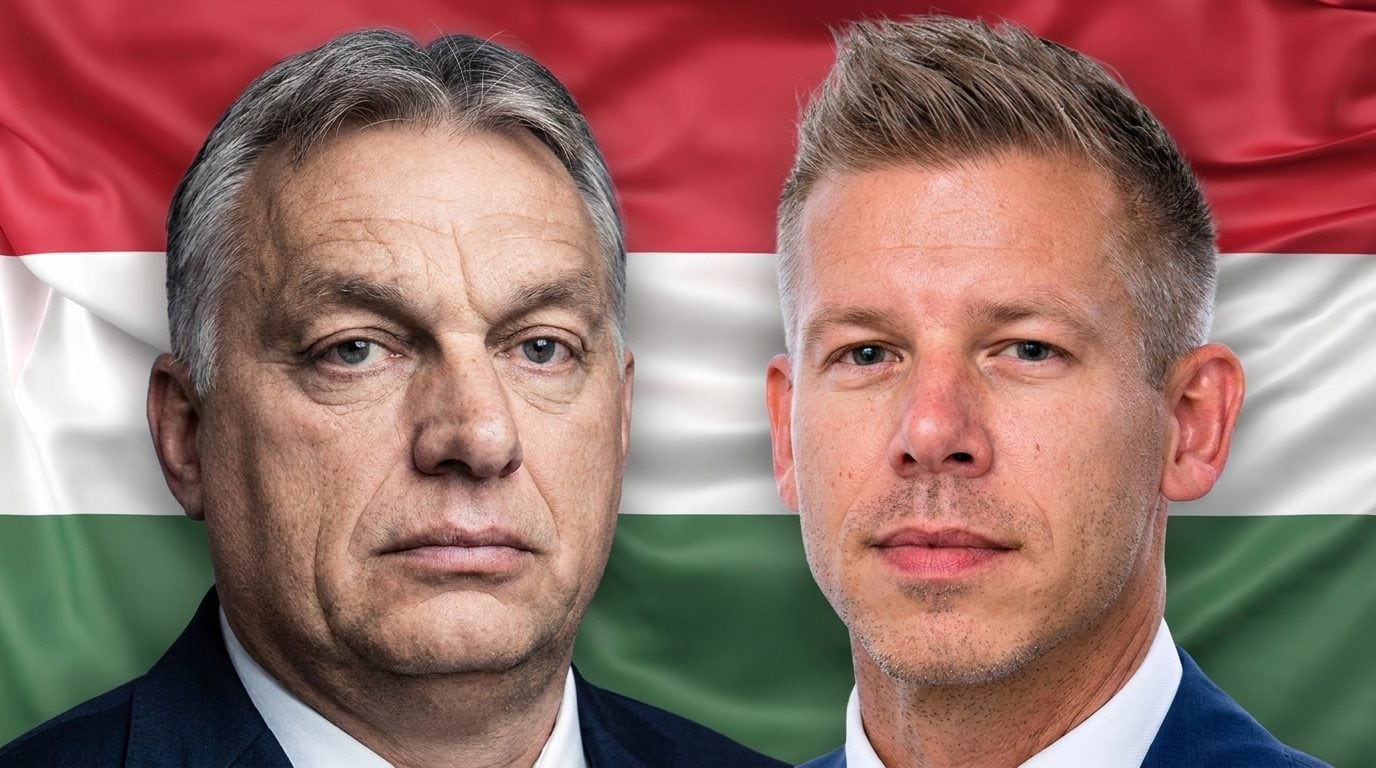
June 15th marks a historic watershed for Hungary: the new Parliament in Budapest approved a constitutional amendment which, by introducing the limit of two terms (the equivalent of 8 years in total), makes de facto Viktor Orbán no longer eligible for the office of Prime Minister. A rule that many have defined as anti-Orbán.
It is as if a new political “order” had been established in Hungary, which began in the aftermath of the elections of 12 April 2026, which saw the triumph of the ex-Dauphin Péter Magyar and the exit of the traditional parties. The latest elections have in fact turned into a real referendum on Orbán, putting an end to his long political dominance and marking the rise of the new Tisza party. Although Magyar, who took office on May 9, publicly presents himself as a pro-European liberal-conservative, observers remain vigilant: the unknown is whether he will really dismantle this vast apparatus or whether, on the contrary, he will appropriate it to govern unopposed.
The last elections: the advent of Péter Magyar
On 12 April 2026, the inhabitants of Hungary were called to participate in the general political elections which resulted de facto in an authentic referendum on whether or not Prime Minister Viktor Mihály Orbán will remain in power, whose career, alternately both in government and in opposition, has marked Hungarian national and international politics from the end of the Communist Era to the present day, and, at the same time, in the rise to power of his challenger and former dolphin Péter Magyar.
But even more than Orbán’s defeat and Magyar’s victory, the latest elections marked the end of a party system that was traditionally very plural in its offer to the electorate and the establishment of an authentic “new order” about the final outcomes of which we cannot help but wonder.
The end of traditional parties
From the end of the Cold War to today, the political-institutional landscape of Hungary has been characterized by the presence of numerous parties ranging, in ideological terms, from the extreme right to the extreme left. However, there was one constant; in all ten elections that have characterized the last thirty-six years of the country’s institutional life, Viktor Orbán and his Fidesz party have been present, sometimes as an opposition formation, sometimes as a government party.
Although at the beginning Fidesz was only one of the many Hungarian political parties, over time Orbán managed to transform it into the pillar of the entire political system, especially in the period between 2010 and 2026, coinciding with his second period of “premiership” (the first was between 1998 and 2002). The result of this process of “Orbanisation” of politics has been the progressive disappearance, or in any case the reduction to a minimum, of all the traditional parties which in fact, after this year’s elections, have completely left parliament.
Will the “Orbán system” survive its founder?
In addition to profoundly impacting the world of politics, Orbán has created a pyramidal and sprawling control system that has influenced the public life of his country in all areas, so much so that Hungary is today to all intents and purposes a country no longer characterized by those basic “checks and balances” (the famouschecks and balances“in the Anglo-Saxon dialect) which characterize the institutional life of a modern liberal democracy. The transformation was so profound that it led the strong man from Budapest to speak of the creation of the first “illiberal democracy” in the world and to subsequently set himself up as a model for other authoritarian leaders but aspiring to maintain at least a “formal semblance of free participatory elections”; a sort of fig leaf that can be used both on the domestic and international front to demonstrate that “despite everything, citizens are free to choose who leads the country”. With the disappearance of traditional parties from the political-institutional scene, however, it is by no means guaranteed that the system created by Orbán will also end up like those who created it.
The new Prime Minister Peter Magyar and the great unknown
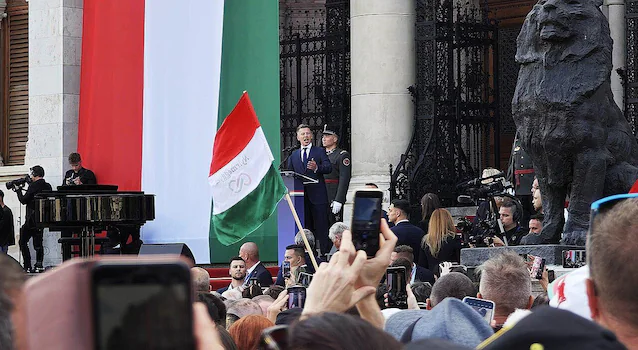
The big winner of the election was Péter Magyar, who assumed the position of Prime Minister on the following 9 May. Coming from a family with ancient political traditions, Magyar was originally Orbán’s darling, before entering a collision course with the latter and joining, together with several Fidesz defectors, the Tisza party, which he led in what became the clearest victory in the history of Hungarian elections. Although the mass media have long described Magyar as a pro-European liberal-conservative, it should not be forgotten that the exact same label was once assigned to Orbán, before he implemented his great “political somersault”. At the moment, net of public declarations, it is not at all clear whether Magyar will actually fulfill his promise to “dismantle the Orban system” or will simply decide to “replace him” by becoming the new undisputed lord of Budapest. Given the bitter lessons that the past has taught us in this part of Europe, it is better to continue to be vigilant.
It is also true, however, that some positive developments are taking place, given that on 15 June the new Parliament in Budapest approved a constitutional amendment which, by introducing the limit of two terms (the equivalent of 8 years in total) would now de facto make Orbán no longer eligible. Likewise, the green light was given to a constitutional amendment that will pave the way for the dismantling of the so-called “Office for the Protection of Sovereignty”, created in 2024 and deemed incompatible with EU law.
Expectations for Hungary’s future in foreign policy
Beyond the evolutions or involutions that the “country system” will take in the future on the domestic side, it is equally necessary to take into consideration the fact that Hungary has always occupied a very important position in that vast area located between the Balkans, Central Europe and Eastern Europe. Exemplary is the fact that, both as an independent state and as an integral part of other empires, Hungary has participated in all the most important wars that have affected the European continent in the last 500 years (without ever winning one). This has meant that, like it or not, other European countries have had to look to Budapest as a center of stability or as the origin of all instability in that area. Orbán was aware of this, and for this very reason he worked to create a real sphere of influence in the area, along the lines of other Hungarian leaders of the past. From this point of view, given that foreign policy and geopolitics respond much more to objective logics than internal political problems, on this point it is very probable that Magyar, perhaps in a more relaxed context of relations with Brussels, will still attempt to carry forward a regional power policy for Hungary.