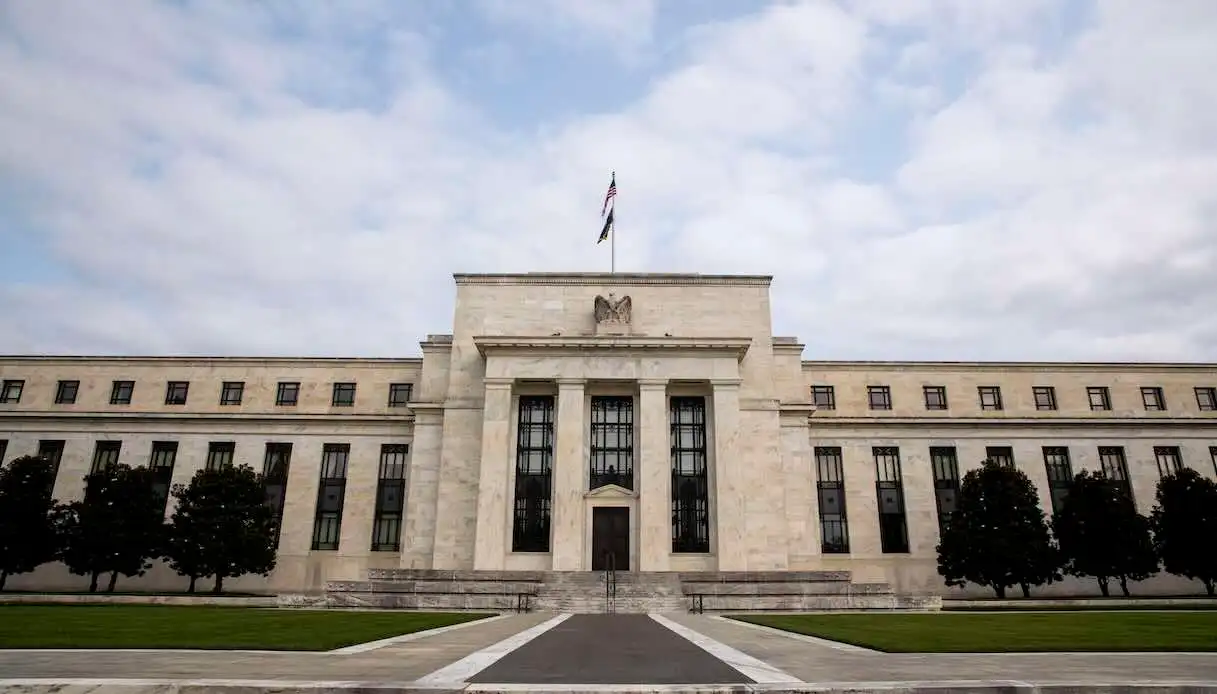
The Federal Reserve closes ranks and sends a clear message to the markets: the fight against inflation is far from over. A few hours after the publication of the PCE index (personal consumption expenditure), one of the price indicators most monitored by the American central bank, declarations of caution and firmness from the main representatives of the Fed are multiplying.
The minutes of the last meeting have already revealed that the majority of the committee is ready to evaluate a new monetary tightening if the cost of living does not slow down, keeping rates stable for now between 3.5% and 3.75%. An orientation confirmed and strengthened in the last few hours by the interventions of key figures such as Neel Kashkari, Lisa Cook, Philip Jefferson and Austan Goolsbee, all agreeing that price stability is the absolute economic priority of the moment.
Neel Kashkari
Minneapolis Federal Reserve President Neel Kashkari said reducing U.S. inflation is still his top priority.
“I’m focusing a lot on inflation. I’m not ignoring the labor market at all,” he told CNBC at the Bank of Japan-IMES joint conference. “We need to pay attention to both aspects, but the labor market is in fair shape at the moment, while inflation is simply too high.”
Lisa Cook
Kashkari’s comments followed remarks by Fed Governor Lisa Cook, who said inflation was “clearly moving in the wrong direction.”
“After five years of above-target inflation, I am particularly alert to the risk of high inflation becoming entrenched in pricing and wage-setting patterns,” she said in a speech at the Stanford Institute for Economic Policy Research. “Therefore, I am ready to raise rates if the expected disinflation does not manifest itself in a timely manner,” she added.
Philip Jefferson
Federal Reserve Vice Chairman Philip Jefferson said the current monetary policy stance is correct given the upside risks to the inflation outlook.
The current rate target range places the central bank “well positioned to respond to economic developments based on incoming data, the evolving outlook and the balance of risks,” he said in a speech for the Bank of Japan-IMES joint conference
Jefferson, the number two of the central bank, did not say anything about the next moves in terms of interest rate policy, limiting himself to declaring that, in view of the meeting of the Federal Open Market Committee (FOMC) on 16-17 June, “I have not yet expressed a definitive opinion and I look forward to discussing with my colleagues the policies necessary to best achieve our objectives, the result of the dual mandate”.
Austan Goolsbee
Chicago Fed President Austan Goolsbee, who voted against the last interest rate cut in 2025, said he expressed his dissent because he wanted evidence that inflation would not be persistent. “I don’t regret voting against it in that meeting, because the inflation didn’t turn out to be as temporary as was initially announced,” he added in an interview with CNBC.
However, Goolsbee said that if inflation were to begin moving back toward the Fed’s 2% target, interest rates would “eventually stabilize at a level well below where they are today.”