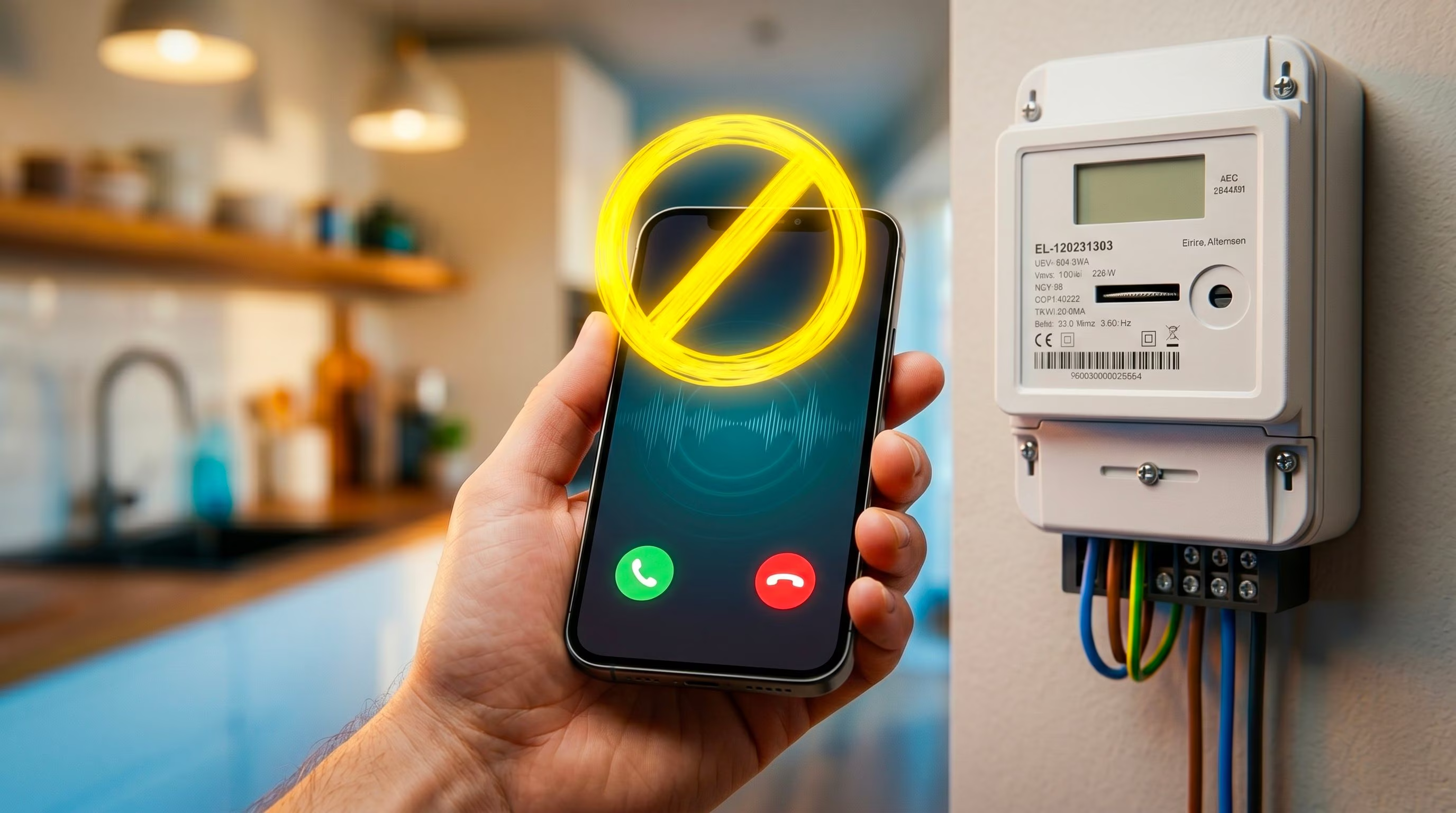
From today, Friday 19 June 2026, a new regulatory shield against unwanted commercial calls comes into force. The reform primarily concerns the energy sector – therefore electricity and gas – and introduces a fundamental change in the relationship between consumers and companies: the opt-in principle. What does this mean in simple terms? That an energy company can only contact us for business purposes if we have previously given explicit consent. If an agreement is concluded by telephone without this demonstrable authorization, it will be deemed legally void. And the burden of proof is on the company, not the consumer.
But be careful: contrary to what you might read elsewhere, companies that operate in the telecommunications field (those that offer telephony and Internet offers, so to speak) at least for the moment remain outside of this reform. The rule that would have extended the same obligations to telcos was contained in the last one Excise Decreebut it was canceled following an agreement between the Government and the Quirinale. It could find space in another decree in the coming months.
Telemarketing is worth 3 billion euros a year
To understand the extent of the phenomenon that the new law aims to combat, just look at some data: the telemarketing market in Italy is worth over 3 billion euros a year, involving more than 2,000 call centers and around 80,000 operators. But alongside operators who work legally, a parallel network proliferates which generates something like 15 billion unwanted calls every year.
The authorities have tried to stem the phenomenon as early as 2025, introducing filters on the landline and mobile networks to block falsified national numbers: according to what AGCOM declared, 10 million illicit contacts are intercepted and blocked every day. But illegal call centers quickly adapted, moving their centers out of Italy and using real foreign prefixes from European countries, such as France or Great Britain. Today, around 23 million daily rings show an international prefix, misleading those waiting for a work call from Europe.
The most affected sector has historically been the energy sector, thanks to the transition towards the free market. Consumer associations estimate that between 300,000 and 1 million energy contracts are activated every year using opaque or deceptive methods, with an extra cost for families of between 100 and 500 euros per year in the bill and an overall loss of almost 2.1 billion euros.
How the block works and what changes from 19 June 2026
Starting from June 19th, the total blocking of communications for commercial purposes that have not been authorized in advance by the recipient of the phone call or any other form of communication (e.g. e-mail, promotional SMS, etc.) comes into force. In fact, the new regulation introduces the obligation of the “opt-in” regime: companies can initiate a commercial contact only if they have explicit, clear and verifiable permission, previously granted by the user (for example by filling out an online form or contacting customer support directly). Without this formal authorization, any contact is considered unlawful. Any commercial agreement concluded by telephone by an operator that violates these rules will have no legal value and, therefore, will be considered null and void.









