Tossing and turning in bed, staring at the ceiling and waiting for a sleep that never seems to come. It is a frustrating experience that unites millions of people around the world, a symptom of a true “silent epidemic”. In recent decades, thanks to the frenetic pace of life and the omnipresence of screens, we have progressively sabotaged our biological clock, losing precious hours of rest.
And while we struggle to close our eyes, a multi-billion dollar industry has exploded around our tiredness Sleep Economywhich sells us drugs, supplements and technological gadgets to monitor the night. A business which, paradoxically, risks generating new “perfect sleep” anxieties. But what exactly is happening to our brain? And what are the scientifically proven methods to go back to sleep without depending on pills or devices?
12 million Italians suffer from sleep disorders: the numbers
In 1942, at the height of the Second World War, the global average of sleep was 8 hours a night. Today we went down to 6.8 hours. Practically no country in the world regularly reaches the fateful recommended 8 hours. In Italy, according to the latest statistics from the Italian Association of Sleep Medicine, 12 million people suffer from sleep disorders. We are talking about one in four adults and one in five minors. In 60% of cases, women are the most affected. The regional averages are interesting: in the South we sleep less (6.6 hours in Puglia and Sicily) compared to the North, with Val d’Aosta boasting the record as the most rested region (7.5 hours), followed by Lombardy (7.3).
Age also matters: young people between 18 and 24 sleep one hour less than those over 65, 6 hours and 40 minutes against 7 hours and 40. The average sleep quality score of Italians fell from 71 in 2024 to 69 in 2025. The duration also reduced, from 7 hours and 5 minutes to 6 hours and 58.
To understand what went wrong, we need to look inside our brain. The suprachiasmatic nucleus is located in the hypothalamus, a group of approximately 20,000 neurons that acts as a real biological clock. It regulates temperature, hunger and, of course, sleep on a 24-hour cycle. This mechanism is called circadian rhythm.
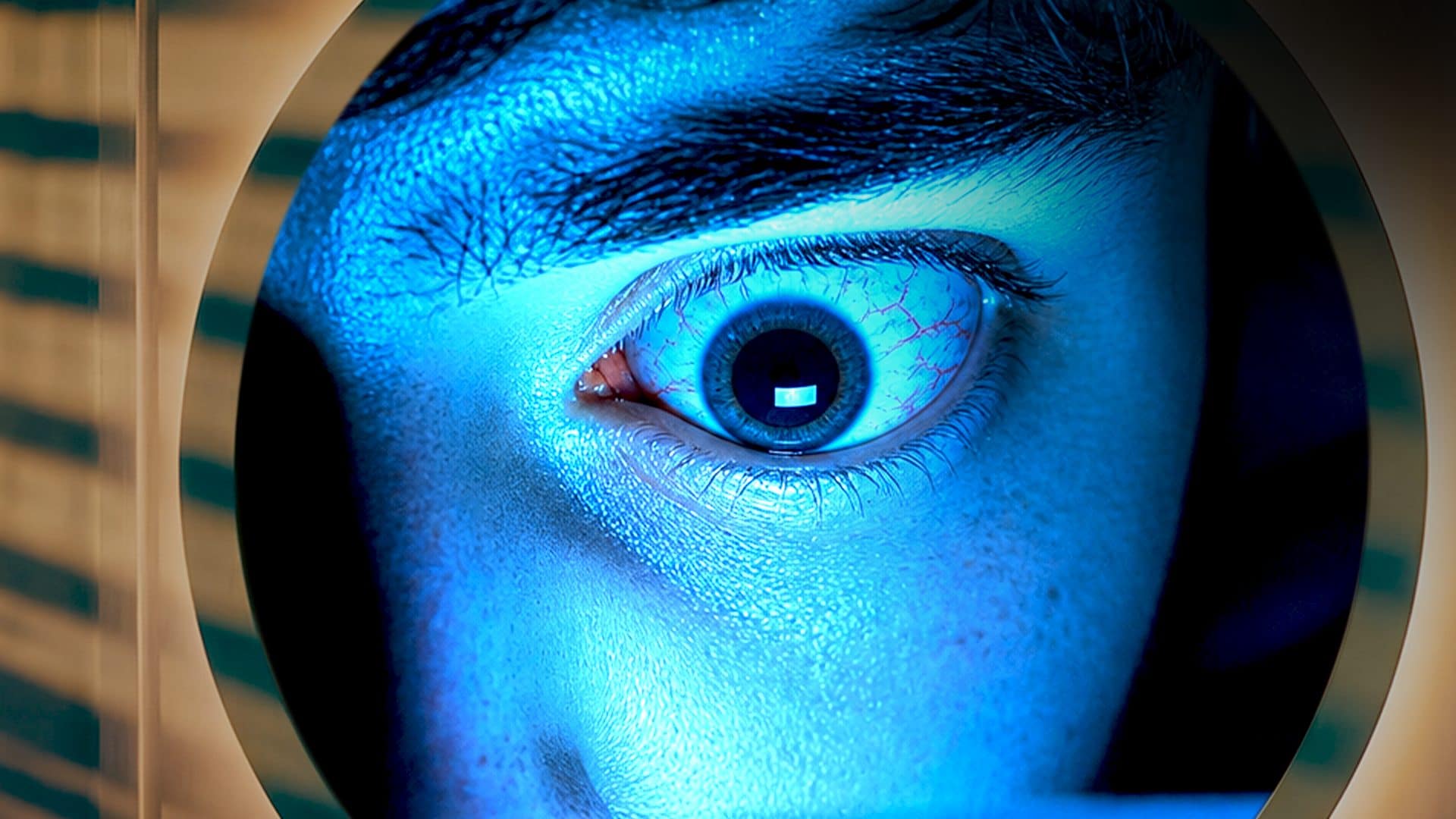
The “conductor” of this rhythm is the light. When the retina senses light, it signals the pineal gland to stop producing melatonin (the sleep hormone). When darkness falls, melatonin increases and the body prepares for sleep. It has worked perfectly for hundreds of thousands of years. Then, for the last 150 years, we have filled the nights with artificial light. And today, our brain interprets the light from a smartphone as a signal that it is broad daylight, blocking the onset of physiological night.
Screens and sleep: the 3 mechanisms that keep us awake
It is often believed that turning off the phone half an hour before sleeping, or using blue light filters, is enough to solve the problem. Unfortunately it’s not that simple. Research has identified three distinct mechanisms through which screens steal our sleep:
- There light: as already mentioned, evening light delays the production of melatonin. A 2014 study showed that reading on a bright e-reader before bed (compared to a paper book) delays melatonin production by 90 minutes, reduces deep REM sleep, and leaves you less rested the next morning.
- THE’cognitive arousal (mental activation): the contents we watch evoke anxiety, anger, fear or excitement (think about doomscrolling or a video game). This keeps the brain in a state of alert, regardless of the brightness of the screen.
- The “Displacement” (the shift): every minute spent scrolling social media in bed is, literally, a minute taken away from rest. The screen not only delays sleep, it erases it from the agenda, moving the moment in which we fall asleep forward but without being able to delay the alarm the next morning.
Finally, there would be a fourth, often ignored factor: being woken up by devices or using them when waking up at night is associated with shorter sleep duration. The telephone on the bedside table is therefore not just an evening temptation but a source of interruptions nocturnal.
The business of the “Sleep Economy” and night-time performance anxiety
While we sleep less and less, the industry that promises to make us rest is doing a roaring trade. There Sleep Economy (mattresses, apps and wearable devices, supplements) reached a value of in 2024 585 billion dollars. The market for smartwatches and hi-tech rings for sleep monitoring alone is close to 25 billion with an expected growth that could bring it to 134 billion by 2034.
And here a paradox arises: the same industry that produces the screens that keep us awake sells us the gadgets to monitor how badly we sleep. This has generated a new pathology called Orthosomnia (the obsessive search for perfect sleep). More and more people are showing up at sleep clinics not because they feel tired, but because their smart ring or watch says they slept poorly. The obsession with maximizing your score on the app generates performance anxiety which, ironically, further worsens the quality of real rest.
A 2024 study published in Brain Sciencesconducted on 523 participants, estimated a prevalence of orthosomnia of between 3% and 14% among those who regularly use sleep monitoring devices. It’s the perfect paradox of the wellness industry: the tool you buy to sleep better can become the reason you sleep worse.
Possible solutions: what is CBT-I
Is there a way to regain sleep without resorting to drugs or gadgets? It would seem so, it’s called CBT-I (Cognitive-Behavioral Therapy for Insomnia). It is not a pill, but a psychological journey of 6-8 sessions that works on the causes of the problem through five components:
- Sleep restriction: the time spent in bed is drastically reduced (e.g. if you sleep 6 hours but spend 8 in bed tossing and turning, you are only allowed to stay in bed for 6 hours). This consolidates sleep, making it deep and continuous.
- Stimulus control: the bed must only be used for sleeping. If you don’t fall asleep after 20 minutes, you have to get up and go to another room, in darkness or almost, without screens, returning to bed only when real drowsiness sets in.
- Cognitive restructuring: we fight toxic thoughts like “If I don’t sleep 8 hours tomorrow I’ll be a zombie”, which generate anticipatory anxiety.
- Sleep hygiene: Fixed hours, cool room, no evening caffeine.
- Relaxation techniques: diaphragmatic breathing and muscle relaxation.
Studies confirm that CBT-I significantly reduces the time it takes to fall asleep and improves sleep efficiency, with long-lasting results. What’s the problem? Accessibility. While a sleeping pill can be obtained with a doctor’s prescription in 5 minutes, there are still very few therapists specialized in CBT-I and the waiting lists are very long.
Meanwhile, the multibillion-dollar Sleep Economy business continues to grow. And we continue to pay to solve a problem that, often, the very tools we buy have helped to create.