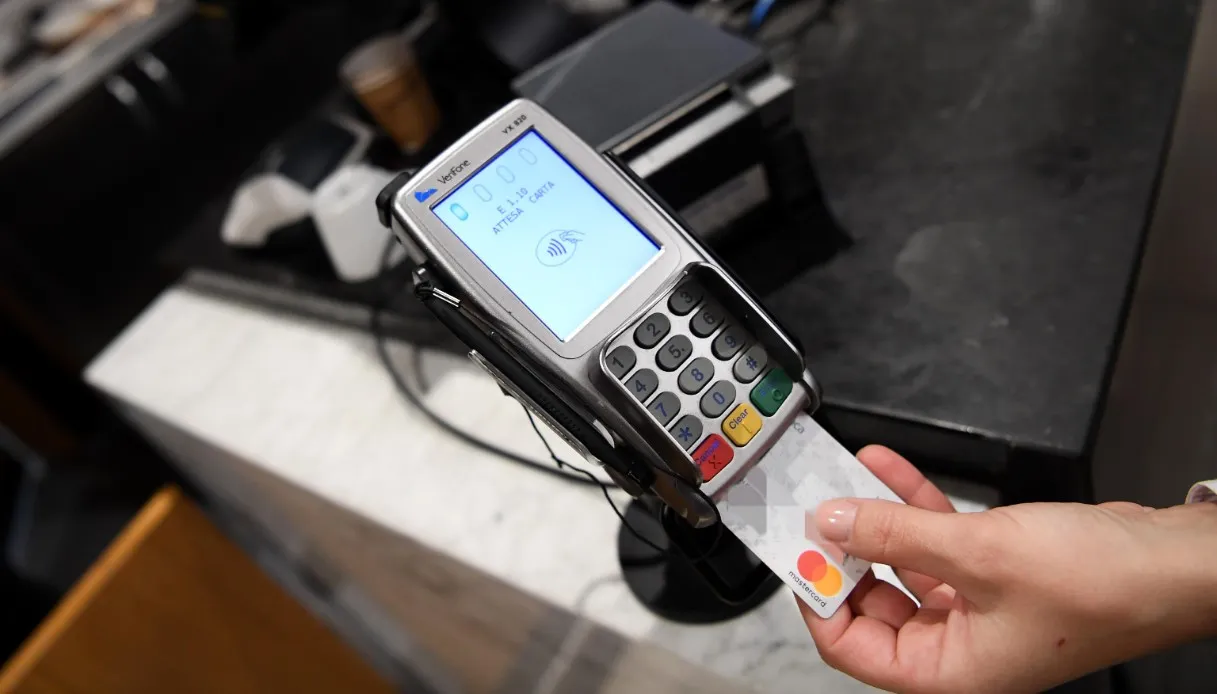
The new Memorandum of Understanding on the costs of electronic payments was signed at the Ministry of Economy and Finance. The agreement aims to reduce the costs that traders, artisans and professionals incur every day to accept credit and debit cards, and to finally make the offers of the different operators comparable. An expected signature, which arrives at a time when digital payments in Italy are growing at a rapid pace and the pressure on POS commissions is increasingly felt by those who manage a business.
The Protocol was signed within the Permanent Table on Electronic Transactions established at the Treasury Department, and represents the natural evolution of the commitment launched by the government in July 2023. Compared to the previous agreement, however, the new one applies to a larger group of merchants.
The new costs for the POS
The Protocol aims to reduce costs and increase the transparency of offers. On the cost front, the agreement introduces a distinction by turnover band.
The agreement invites banks and operators to propose offers to merchants on the cost of transactions for payments under 10 euros. These offers must be dedicated to companies with annual revenues of up to 400 thousand euros. For businesses with a turnover between 400,000 and 750,000 euros, at least one dedicated commercial offer is provided.
Promotions must be active for at least twelve months and advertised for the same period. The Protocol will have a total duration of 24 months, at the end of which it will be possible to carry out an evaluation of the results.
In terms of transparency, each operator will have to present their economic conditions through standardized and comparable forms, drawn up according to a single model. The forms will be published on the respective websites and transmitted to the CNEL, which will make them available in a dedicated online section.
How much you can save
The Protocol does not impose mandatory maximum commissions nor does it make transactions under 10 or 30 euros free by law. This is a voluntary agreement, and the Competition and Market Authority has expressly confirmed that each operator maintains “full autonomy” in determining its own economic conditions. The Antitrust did not raise any competition objections precisely because the agreement does not coordinate prices or impose common tariffs.
The actual savings will therefore depend on the concrete offers that individual operators decide to put on the market: on the percentage applied, on the possible presence of fixed costs, on the type of card used by the customer and on the conditions envisaged after the expiry of the promotion.
It is also worth remembering that the limits set by EU Regulation 2015/751 concern only the portion transferred between banks, not the overall commission paid by the merchant to its affiliate. The final cost remains variable from operator to operator.
Digital payments in Italy
The agreement comes at a time when POS payments are increasing more and more. According to a report by the Centro Studi di Unimpresa, in 2025 the transactions carried out with payment cards in Italy reached 12.3 billion, an increase of 13.5% compared to the 10.9 billion in 2024. The overall amounts rose from 469 to 506.3 billion euros, with an increase of over 37 billion. Cash, for its part, continues to lose ground: withdrawal operations fell by 5.5% and the amounts withdrawn decreased from 352.2 to 340 billion euros.
And also for 2026 the data will be increasing, thanks to the automatic matching between cash registers and POS. According to the Revenue Agency, in the first five months the mechanism brought out 115 million more receipts and an additional tax base of 5.3 billion euros.