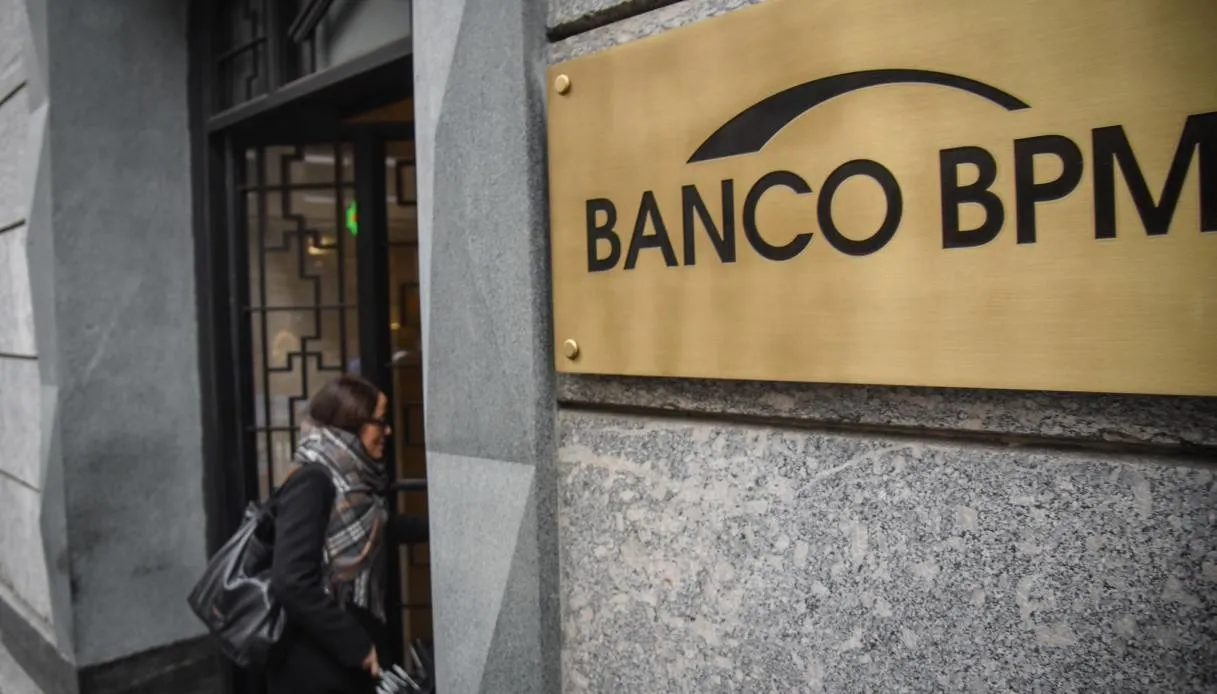
Italian banking risk opens a new chapter. Crédit Agricole is studying a strengthening of its presence in BPM deskof which he is already the largest shareholder with 22.9% and for which he obtained authorization from the ECB to increase up to 29.9%, even without any definitive decision having been taken.
According to Bloomberg, the summit of Banking discussed how to react to the takeover bid launched by Intesa Sanpaolo on Monte dei Paschi di Siena (MPS)which put the proposal for a merger “between equals” presented last June 7th by Banco BPM to Monte dei Paschi out of play. The scenario changed in a few hours, as the following day, Intesa Sanpaolo relaunched with a public purchase and exchange offer on the entire capital of MPS, for a total value of 30.6 billion.
Paris does not rule out reopening the dossier on the transfer of Italian activities to Bpm, while it judges a direct initiative on Montepaschi to be too demanding a target after Intesa’s blitz.
Crédit Agricole’s defensive strategy
On the regulatory front, the discussions are still in the preliminary phase and Crédit Agricole has not commented on the indiscretions, but the bank still has the green light from the ECB to approach almost 30% of the capital. According to Equita analysts, as a large shareholder of Bpm the French group would automatically find itself a significant shareholder of the new entity born from a possible aggregation, being able to affect the industrial balance without assuming control.
The French move is purely defensive and tactical. Italy represents the second domestic market for Agricole: rising to 29.9% in Banco BPM means protecting the Milanese bank from possible hostile takeovers and, at the same time, guaranteeing a de facto right of veto on any future extraordinary operation.
Is the Third Pole waning? The new risk scenarios
At this point, the map of Italian credit is redrawn around three big questions. The first concerns the fate of Banco BPM which, having been orphaned by MPS, could be pushed to look towards the Emilian axis (BPER) or to strengthen the industrial partnership with Crédit Agricole itself, transforming itself into the Italian hub of the French.
The second element concerns the UniCredit’s reaction. The bank’s CEO Andrea Orcel, who has always been attentive to external growth, may not stand by and watch the strengthening of historic rival Intesa Sanpaolo.
Finally, there is the role of Antitrustsince the 30.6 billion operation on MPS will inevitably raise the attention of the competition authorities, both in Rome and Brussels, due to the risk of excessive concentration in some key regions of the country, even if the agreement with Unipol should secure the takeover, silencing the possible objections of the supervisory authorities. a well thought out operation.
In summary, what began as a mid-sized consolidation attempt has turned into a geopolitical and financial chess game between Turin, Milan and Paris, where size scale has become the only real defense against margin erosion.
The impact on the stock market
On the stock market the reaction is compound. On Piazza Affari the Banco BPM stock trades around 15.79 euros (-0.25%), after the rise the day before when the rumors had pushed the stock by around 2% to 15.83 euros. In Paris Crédit Agricole lost 0.23% to 17.58 euros.