The beauty must-haves for 2026? According to the experts who met recently in Rome on the occasion of the congress of the Italian Society of Aesthetic Medicine (SIME), the trend is towards a stop to excessive volumes in the face of a green light for natural, regenerative and personalized results.
A global trend, that of “Quiet Beauty” and regenerative medicine, welcomed with enthusiasm by people who are increasingly oriented towards improving the quality of the skin and transforming the features. In general we no longer try to change the face, but to improve the quality of the skin, slow down time, work in depth. Everything, starting from the diagnosis: it is necessary to understand before treating, and therefore evaluate before intervening.
A simple but revolutionary principle. It is the basis for offering paths built on the individual patient, rather than the classic standardized treatments, which create impersonal clones. In the face of this trend, however, we are witnessing phenomena that are warning, especially among the very young. An editorial published on Dermatol Ther brings attention to the emerging phenomenon of cosmeticorexia or rexia (also called dermorexia), i.e. the concern or obsession with achieving “perfect” skin. The risk of this condition is that it can lead to excessive, age-inappropriate, or compulsive use of cosmetic products and procedures.
Young people are at risk
The research was conducted by Giovanni Damiani, dermatologist and director of the Center for Precision Medicine and Chronic Inflammation at the University of Milan, and Alberto Stefana, psychologist at the Istituto Superiore di Sanità. The two experts focus attention on the risk of bringing beauty towards a medical component, and highlight how the trend towards cosmeticorexia is culturally reinforced, precisely through the medicalisation of beauty, the growth of the market for cosmeceutical products (hybrid products between cosmetics and drugs, containing active ingredients in high concentrations) and by social media platforms, which reward content based on beauty routines and self-presentations centered on physical appearance.
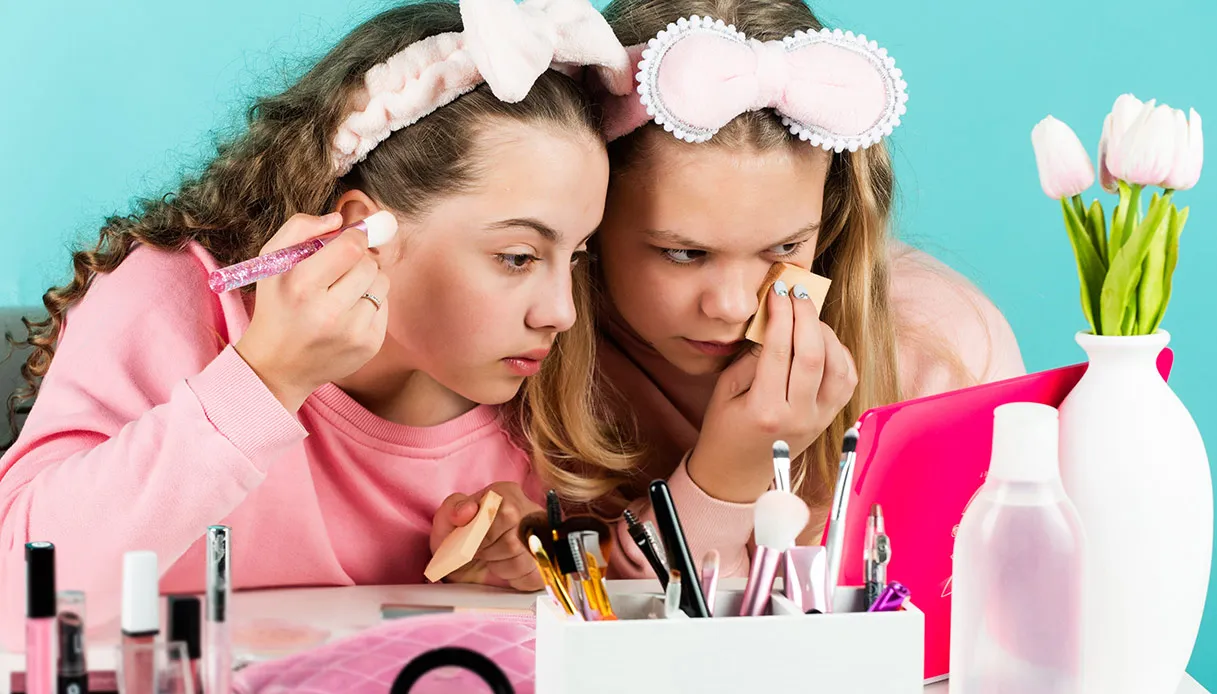
“Cosmeticorexia mainly affects pre-adolescent groups, as emerged internationally with the case of the so-called “Sephora kids”: a viral trend that mainly involves the Alpha Generation (approximately from 8 to 14 years old) – but not only – obsessed with high-end skin care and makeup products, intended for adults”
Giovanni Damiani comments in a press note from the same university.
“Such cosmetics often have a significant cost which weighs on families, who are often unaware of the danger implied by the cosmetic which, by distorting the appearance of the child’s face, distorts its internal representation. In other words, the cosmetic always makes the face of an adolescent look the same and unperturbed, which naturally changes daily and grows until it acquires an adult appearance. Here, the cosmetic applied excessively breaks precisely this perceived evolution”.
Looking for diagnosis
Social media has propagated this trend, omitting the dangers for the skin (contact dermatitis and allergies) and for the mind (risk of developing body dysmorphia). For experts, it really takes attention. Emerging signs indicate that exposure and adoption of these practices are occurring at increasingly earlier ages, raising concerns about irritant and allergic contact dermatitis, alterations to the skin barrier, and the reinforcement of dysfunctional ways of monitoring appearance and compulsive skin-grooming behaviors.
In fact, the study points out that it is necessary to give a clear role to this phenomenon also in scientific classification, to define its contours and be able to really help those who find themselves in conditions of potential risk. According to the authors of the study, in fact, although cosmeticorexia is not recognized as a formal diagnosis in current classification systems, it could represent a mental disorder in the spectrum of clinically relevant body dysmorphism, worthy of an operational definition, standardized assessment tools and epidemiological monitoring, through an interdisciplinary approach. Because in the end it is necessary to “see” a face, not simply consider and treat a defect independently. The role of social media and influencers will be fundamental in this area, with the utmost attention to redefining the boundaries between communication and responsibility, between social filters and truth.